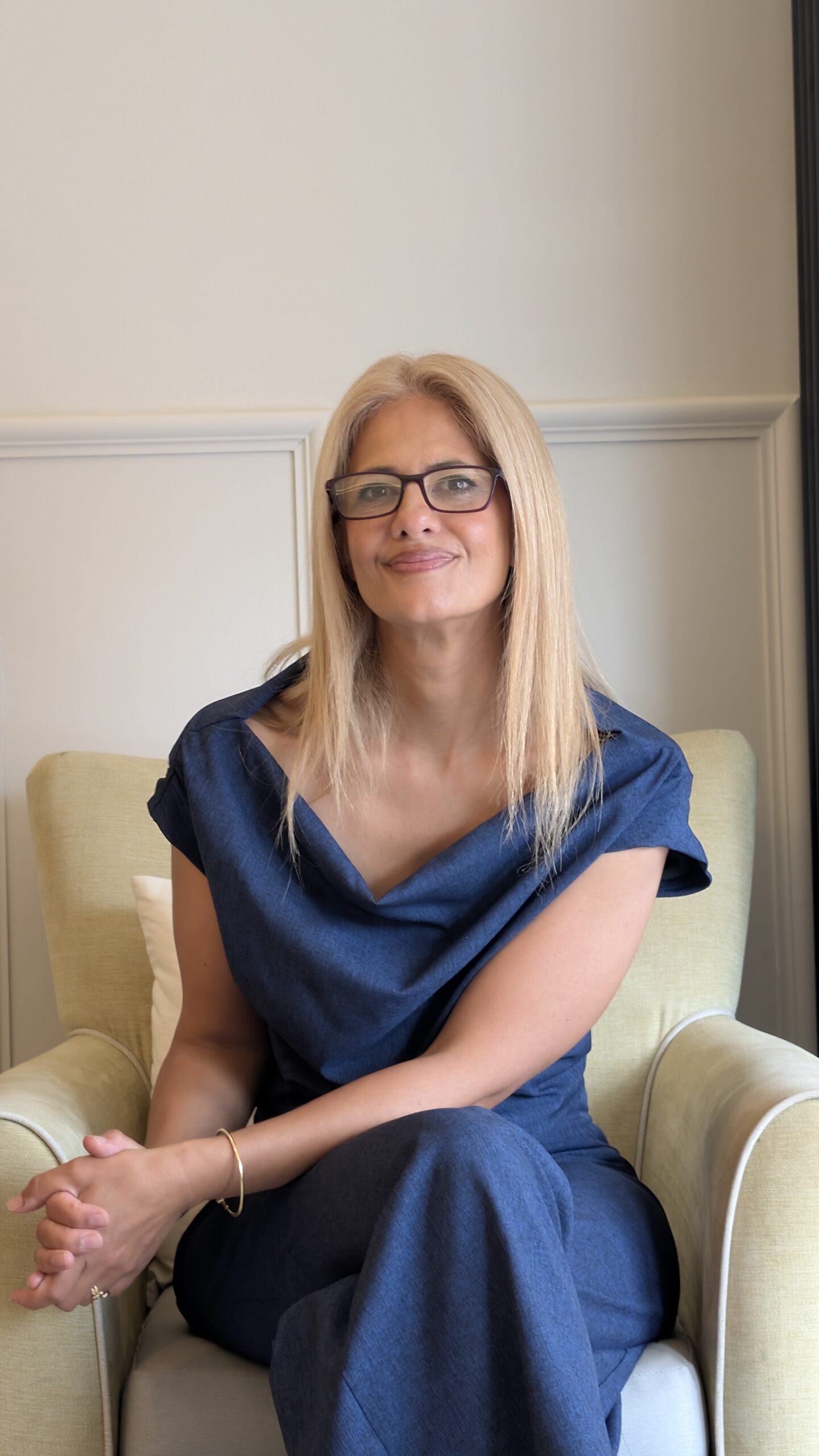
Meet Sharif
Sharif Colbert is the founder and confidence coach behind LifeCoachATL in Atlanta. A Certified Professional Life Coach, he works with capable professionals who feel stuck, helping them build confidence, accountability, structure, and the ability to follow through on what matters most.
When a Career Transition Became an Opening
There are moments when a person realizes that the path he has been following no longer fully belongs to him. For Sharif Colbert, that realization developed gradually through fatherhood, personal reflection, an emerging interest in coaching, and eventually an unexpected professional transition.
Before becoming a coach, Sharif worked in corporate America as a recruiter. The experience taught him skills that would later become central to his coaching practice. He learned how to listen closely, understand people, solve problems, gather information, and navigate the complicated demands of professional and personal responsibility.
At the same time, he had begun questioning whether corporate work was where he wanted his future to remain. He started taking courses and exploring possibilities beyond his existing career while conversations with people around him increasingly pointed him toward coaching.
Then came 2020.
As the pandemic reshaped workplaces and livelihoods, Sharif’s company began laying people off. Eventually, he lost his own position.
The layoff was difficult, but it did not create his interest in coaching. That transition was already taking shape. Instead, losing his job accelerated a process that had already begun and forced him to confront questions he had been considering for some time.
What was he genuinely good at? How could he serve other people? And could he create an income from work that felt meaningful rather than simply practical?
Those questions became more important than the job he had lost.
The Question His Daughter Asked Him
The deeper personal turning point in Sharif’s coaching journey came from an unexpected conversation with his youngest daughter.
As his children approached adulthood, she asked him what he planned to do after they graduated from high school. He initially had no clear answer. His identity had been deeply connected to being a father, and much of his life had been organized around raising his children.
Then she asked a more direct question:
“Pop, we’re eventually going to get older. What are you going to do then?”
The question stayed with him because it exposed something he had not fully considered. He had spent years thinking about what his children needed from him, but he had not spent enough time thinking about who he wanted to become as that particular chapter of fatherhood changed.
Around the same period, a friend who had become a life coach suggested that coaching might suit him. She recognized qualities he already possessed, particularly his ability to listen deeply and understand people.
Sharif took the suggestion seriously. He found a coaching institute, committed himself to learning the profession, and eventually became a Certified Professional Life Coach.
The transition was not simply about finding another occupation. It became part of a larger process of understanding himself and deciding what he wanted his life to stand for.
Learning to Change the Meaning of the Past
Some of Sharif’s most important lessons came from experiences he had carried for years.
One was his understanding of being adopted. For a long time, he had attached a painful conclusion to that part of his story, wondering how anyone could love him if his own mother had not wanted him.
Therapy helped him examine the experience differently. Coaching gave him another way to question the conclusions he had built around it.
The circumstances themselves had not changed. What changed was the meaning he had assigned to them.
He began to consider that his mother’s decision could have represented sacrifice rather than rejection. That distinction mattered because the meaning attached to an experience can influence relationships, decisions, confidence, and self-worth for years afterward.
For Sharif, this became more than a personal realization. It became part of the way he works with clients.
Rather than immediately judging someone’s behavior, he tries to become curious about the belief or conclusion underneath it. What does the person believe about himself? What story has he been repeating? What assumption is influencing the decision he keeps making?
Rejection, abandonment, self-doubt, and self-sabotage had all played roles in his own life. He became skilled at appearing confident while still carrying beliefs that affected his relationships and decisions.
He did not move beyond those patterns by pretending they did not exist.
Therapy, coaching, difficult feedback, and personal reflection helped him recognize them. Over time, he learned to notice his patterns before they could quietly make decisions for him.
That experience continues to influence his approach to coaching. People can be challenged without being shamed, he believes. Accountability does not have to make someone feel broken. Sometimes the most useful thing a person can receive is an honest conversation that allows him to see himself clearly.
From Dad Coaching to a Broader Practice
When Sharif first entered coaching, confidence was his central focus. His work later became particularly focused on helping fathers build stronger relationships with their children.
That work remains important to him.
Through his experiences as a father and coach, he found genuine meaning in creating spaces where men could think honestly about fatherhood, relationships, responsibility, and personal growth. Over time, however, he recognized that helping dads was one part of what he was equipped to do rather than the entirety of his coaching practice.
That realization brought him back toward a broader focus on confidence.
Today, Sharif primarily works with capable professionals who know they have more to offer but find themselves repeatedly getting in their own way. Their challenges may appear as overthinking, self-doubt, inconsistent follow-through, hesitation, or difficulty trusting their own decisions.
From the outside, these people may look successful and responsible. Internally, they may be struggling with patterns that prevent them from acting on what they already know.
Sharif is interested in that gap.
He does not believe every struggle is evidence of laziness or a lack of discipline. Sometimes a person is overwhelmed. Sometimes fear is disguised as procrastination. Sometimes years of discouragement have weakened someone’s trust in himself.
His role is to help clients separate the story from the reality, identify what they can control, and decide what needs to happen next.
That work extends beyond individual coaching. Through LifeCoachATL, the You Are Dope! podcast, his work with fathers, men’s groups, and Dope Dads Show Up, Sharif continues creating spaces where people can discuss subjects they might otherwise keep private.
For him, the value of these spaces is not simply that people feel heard. Honest conversations can create movement.
A person may finally have a difficult conversation with his partner. He may make a career decision he has postponed for years. He may establish a boundary, take responsibility for a pattern, or begin trusting himself again.
The change can look small from the outside.
For the person experiencing it, it can represent a completely different way of living.
A Foundation Strong Enough to Carry Others
Sharif describes the impact of his work as a ripple effect.
When one person becomes more grounded, the effect does not necessarily stop with that individual. A more secure person may communicate differently with his family. He may become more present as a parent, more honest as a partner, more consistent as a colleague, or more confident as a leader.
That is why Sharif sees his work as foundational.
Confidence, self-trust, accountability, and personal responsibility influence nearly every part of life. His goal is to help people strengthen those foundations so they can make meaningful changes and carry them into their relationships, families, workplaces, and communities.
The trust he has built through LifeCoachATL is one of the things he is most proud of. LifeCoachATL has earned more than 50 five-star Google reviews.
For Sharif, the significance is not simply the number.
Those reviews represent people who spoke up when they normally stayed quiet, followed through on decisions they had avoided, repaired relationships, changed careers, established boundaries, and began trusting themselves again.
He has created the kind of honest and judgment-free space that he once needed himself.
The Meaning of Being DOPE
The principles that guide Sharif can be found in a word he uses often: DOPE.
For him, it stands for Dependable, Open, Present, and Engaged.
Dependability means that people should be able to trust his word. Openness means remaining willing to listen, learn, and reconsider his own perspective. Being present means giving genuine attention rather than simply occupying physical space. Engagement means staying involved even when a situation becomes uncomfortable.
These principles also shape his understanding of leadership.
Sharif does not expect perfection from himself or from the people he coaches. What he does expect is honesty, effort, and a willingness to take responsibility for what comes next.
His separate SHOW UP philosophy offers another framework for that process: Say It, Hear It, Own It, What Will Happen Next, Unplug, and Practice.
Rather than treating confidence as something that exists only as a feeling, Sharif connects it to what people are willing to say, hear, own, and do next.
That standard also applies to his own life.
He does not rely on motivation to carry him through difficult periods because he knows motivation changes. Instead, he returns to structure.
He looks honestly at what is happening, separates what he can control from what he cannot, identifies a few non-negotiables, and focuses on the next action rather than trying to solve everything at once.
Physical activity helps him maintain that perspective. Walking, working out, and keeping a routine give him space to clear his mind. Time with his husband and family provides another kind of grounding, as do honest conversations and the willingness to ask for support.
For Sharif, balance does not mean giving every part of life equal attention every day. It means noticing when something important has been neglected and making an intentional adjustment before neglect becomes a pattern.
The People Who Keep Him Looking Forward
His children remain among his greatest sources of inspiration.
They have challenged him to see himself beyond the role of father and have confronted him with truths he was not always prepared to hear. His youngest daughter’s question ultimately helped move him toward coaching, but his children continue to influence the way he thinks about courage, responsibility, and identity.
His two youngest children have also demonstrated their willingness to speak when something feels wrong. They have organized marches, advocated for others, and challenged accepted norms rather than remaining silent simply because silence was easier.
What Sharif notices most is the balance between courage and compassion.
They care about the effects their actions have on other people. They make room for people who may feel unheard. Their example reminds him that standing firmly for something does not require losing empathy along the way.
That lesson fits naturally with the way he approaches coaching.
He wants people to become more honest without becoming harsher. He wants them to take responsibility without turning that responsibility into shame. And he wants confidence to become something grounded in action rather than performance.
Building a Wider Space for Honest Change
The next stage of LifeCoachATL is about growth without losing the personal quality that made the work meaningful in the first place.
Sharif plans to continue developing his one-on-one coaching practice while building partnerships with companies interested in providing individualized coaching for employees.
He sees an opportunity to support professionals before their struggles become crises. Confidence issues, burnout, hesitation, and problems with follow-through can remain invisible for a long time. By the time they become obvious at work, they may already have affected performance, relationships, and well-being.
Sharif wants coaching to become available earlier in that process.
He also plans to expand the You Are Dope! podcast, continue creating spaces for men, develop Dope Dads Show Up, and incorporate the broader SHOW UP philosophy into his work.
The broader vision is not simply to reach more people.
It is to create an ecosystem of coaching, conversations, community spaces, and practical frameworks that helps people strengthen the foundations of their lives and carry those changes into their families, workplaces, and communities.
Becoming the Same Man Everywhere
For Sharif, one of the clearest measures of success is personal rather than professional.
He wants the man people encounter publicly to be the same man his husband, children, and family experience at home.
That idea reflects much of what has shaped his journey.
He has learned that confidence is not the absence of insecurity. Growth is not the elimination of every old pattern. Success does not mean never struggling again.
It is about how honestly a person responds when those struggles return.
Sharif has learned to take ownership sooner, recognize patterns earlier, and use structure when motivation disappears. He continues to work on himself while helping others do the same.
His message to capable people is ultimately straightforward. Talent is not always the missing piece. Knowledge is not always the missing piece either.
Often, the real gap is follow-through.
A person can spend years knowing what he is capable of doing without ever turning that potential into consistent action. The next chapter begins when he stops treating old patterns as an identity and starts treating them as something that can be examined, challenged, and changed.
For Sharif Colbert, that is what confidence ultimately means.
Not pretending to have everything figured out, but becoming honest enough to take the next step, responsible enough to keep taking it, and grounded enough to understand that meaningful change rarely belongs to one person alone.
For More Features
Be Featured in The Real Edit!
Every story has the power to shape how we see innovation, leadership, and purpose. If you’re a founder, creator, executive, or changemaker with a journey worth telling , we’d be honored to help you share it.
To inquire about being featured:
Email us at: info@realedit.site
Follow The Real Edit