Scott ManingerThe Weight We Carry in Words
The founder and Chief Exploration Officer of WORDlabs on the sentences that shape us, the pause before meaning, and asking who you want to become.

Scott Maninger is the founder and Chief Exploration Officer of WORDlabs, where he helps people examine the words, assumptions, and beliefs that shape how they see themselves, others, and the decisions they make. After three decades in operations, sales, leadership, and people development, he now focuses on creating space for better questions, more honest conversations, and more intentional ways of moving forward.
The Sentence That Changed What He Heard
Scott Maninger has spent much of his life around words.
For decades, they were part of the environments he worked in, from operations and credit to sales, leadership, coaching, and organizational development. He learned how to communicate, persuade, manage, lead, and build relationships. He also learned that words could carry much more weight than the person speaking them might ever realize.
The realization did not arrive through a business presentation or leadership seminar. It came in a hospital, after hearing the story of a young woman whose life had been deeply affected by a single sentence.
Scott left the hospital and sat in his truck. What followed was 45 minutes of grief, shame, anger, and painful self examination. He began thinking about the words he had used with his wife, his children, his teams, people he had coached, and people he had led. He thought about the words he had heard from others and the words he had repeated to himself.
That afternoon became a dividing point in his life. He began pulling at what he calls the thread of language, asking a question that would eventually shape the work he does today.
For Scott, the answer was impossible to ignore.
Growing Up With Words That Had Weight
Scott grew up in small town Kansas in the 1970s with his mother and sister. His father left when he was two, and childhood brought experiences that shaped how he understood trust, identity, fear, and belonging.
He describes growing up poor, dealing with bullying, difficult family dynamics, and the experience of having his voice and identity taken from him at an early age. He was also diagnosed with depression and anxiety at 14, at a time when conversations about mental health were far less developed than they are today.
Those early experiences did not simply disappear as he grew older. They followed him into adulthood, often appearing as perceptions and assumptions that he mistook for facts.
Yet there was another side to Scott’s childhood. His mother gave him a sentence during a difficult bike ride that stayed with him for decades. He was ten years old, exhausted, riding against the wind, and ready to give up. His mother kept encouraging him to reach the next light pole.
One light pole became the next. Eventually, they made it home.
That sentence became a personal reminder that progress does not always require seeing the entire road ahead. Sometimes the next step is enough.
Scott carried that lesson into the rest of his life.
After graduating in the top 10% of his high school class, he struggled badly in junior college, eventually being removed after earning a 0.25 GPA. He joined the Army National Guard, completed basic training and Military Police school, then returned to college and finished with a 3.92 GPA.
The experience taught him something that would become important throughout his career: discipline could help him move through doubt.
He would rely heavily on that lesson for years.
When Success Stopped Being Enough
Scott built a successful professional career. He worked across credit, operations, sales, and leadership, eventually spending 15 years with The Home Depot and working with regional and national clients.
He built teams, developed talent, improved performance, and earned recognition. He became a top performer in his role and received awards that reflected his ability to deliver results.
But underneath that success, his mental health remained a struggle.
In his twenties and early thirties, extensive testing revealed significant anxiety and depression alongside an exceptionally high IQ. For years, Scott believed he could think his way through almost anything. Planning, discipline, networking, and achievement became tools he used to manage uncertainty.
For a while, they worked. Then they did not.
At one point, Scott experienced a professional setback and was demoted after missing a plan for the first time as a sales leader. He regrouped and performed strongly again. Soon afterward, he had positioned himself as the number one performer in his role.
From the outside, everything appeared to be moving in the right direction.
Inside, something was coming apart.
At 54, while sitting at what looked like the height of his professional success, Scott reached a point where he had planned to take his own life. He and his wife were expecting their first grandchild, and they had been planning their first trip to Tokyo. Yet none of those things could protect him from what was happening internally.
He told his wife what was happening, and they went to the hospital.
Scott entered a 12 week partial hospitalization program.
During that period, he heard the story of the young woman whose experience would ultimately help him recognize the destructive power that words can carry. In an unexpected way, her story helped save his.
The experience forced him to reconsider his definition of strength. He began to understand that acknowledging pain was not the opposite of leadership. In some circumstances, it was an act of leadership itself.
From Performance to Posture
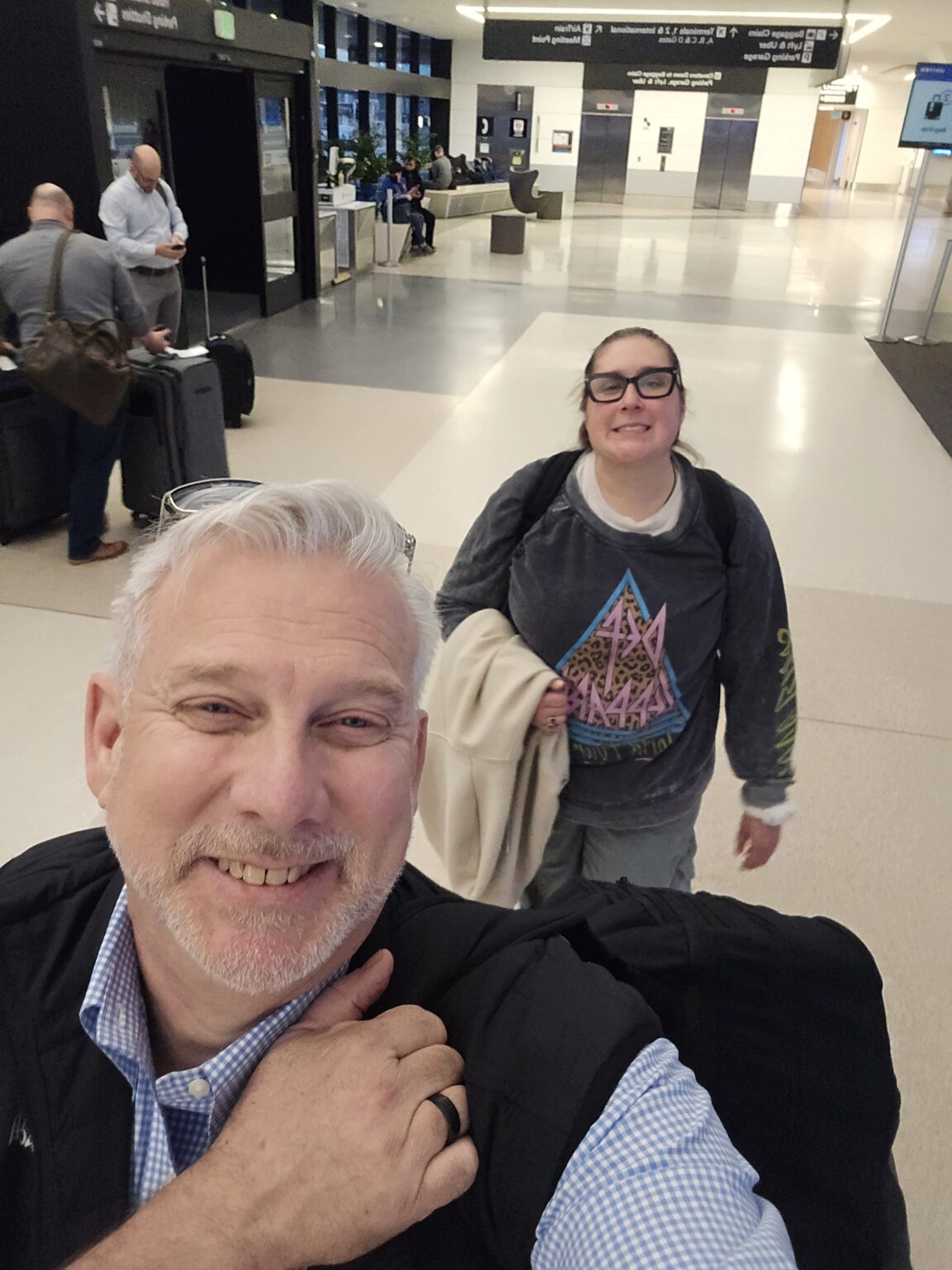
Scott eventually returned to work and moved from Kansas City to San Antonio for a new role and a new team. He continued to perform well, but something had changed.
He was no longer interested only in winning the room. He wanted to understand how to build the room.
That distinction became increasingly important.
Scott began thinking about the difference between presence and posture.
Presence describes the skills someone brings into a situation.
Posture reflects how that person chooses to show up.
His professional career had given him plenty of measurable skills. What mattered more now was how he used those skills in relation to other people.
He remembers winning two MVP awards that had little to do with his technical abilities. They reflected his ability to build relationships, develop people, and live out the values of taking care of others and building strong connections.
That became part of a larger realization.
Success could not simply be measured by where someone ranked, what title they held, or what recognition appeared on a shelf.
The more meaningful question was what happened to other people because you were there.
That idea eventually changed the question Scott was asking about his own future.
He had reached the top of his role. He had earned recognition. He had proven that he could succeed within the system.
But he was increasingly convinced that the work he wanted to do was somewhere else.
After more than 120 days of conversations and reflection with his wife, he made a decision.
He walked away from a position where he was performing at a high level because his understanding of who he wanted to become had changed.
Creating Space Before the Next Decision
That transition became the foundation for WORDlabs.
Scott’s work begins with a simple observation: people carry words with them.
Some are encouraging. Others are painful. Some are accurate. Others are assumptions that have hardened over time until they feel indistinguishable from facts.
The “wordload”
He calls this accumulated weight the “wordload.” Work can be measured on a calendar. Wordload is harder to see. It lives in the sentences people use to describe themselves, their relationships, their careers, their failures, and their futures.
I failed.describes an experience
I am a failure.turns the experience into an identity
The vertical line represents a deliberate pause. It is a reminder that the full story may not be known yet.
Scott’s framework, PRE|fixes, is built around creating a deliberate pause between an experience and the meaning assigned to it.
That pause is not about avoiding action. It is about making room for better questions before assumptions become decisions.
One of the questions at the heart of Scott’s work is particularly simple.
The difference is subtle but significant.
A job title can become something to chase. Identity gives a person something deeper to build from.
Scott has seen this distinction affect individuals, families, teams, and leaders. He recalls working with a retired Army officer who was struggling because he believed he was not where he was supposed to be in life. The comparison behind that belief was not with ordinary peers but with former mentors and commanding officers, some of whom had reached extraordinary levels of achievement.
The man’s accomplishments were significant, but his comparison made them feel insignificant.
The problem was not simply performance. It was the story he was telling himself about performance.
WORDlabs and the Practice of Better Questions
Today, Scott describes WORDlabs as a place where people can examine those stories before they become permanent.

His WORDshops can take place with individuals, teams, or organizations. The conversations are designed to uncover the sentences beneath decisions and behaviors.
Rather than telling people what to think, Scott wants to help them notice what they are already carrying.
That might mean exploring why someone believes they are unqualified, why a leader keeps comparing themselves with someone else, why a relationship has become difficult, or why a past experience continues to influence present choices.
The goal is not to eliminate mistakes. It is to make mistakes less final.
Scott sees failure as something that can be revisited, understood, and redirected. His framework gives people permission to return to an experience without allowing the language attached to it to define the rest of their lives.
He is also interested in what happens when these ideas move beyond individual conversations.
His definition of success has always been connected to the outcomes experienced by other people. Earlier in his career, that meant helping customers grow, improving internal performance, developing teams, or making sure people were supported during difficult moments.
Today, the measure is more personal.
- It is the retired officer who takes his next step.
- It is the person who finds enough confidence to pursue an opportunity.
- It is the stranger who eventually says that talking with Scott made them feel safe enough to be honest.
And sometimes, it is the unexpected realization that words have travelled much further than their original speaker could have imagined.
What His Own Story Taught Him
Scott’s experience with mental health changed the way he thinks about leadership, but it also changed the way he understands authenticity.
His son, a police officer, once told him that he had used Scott’s mental health journey while talking a man down from a high rise balcony. The man was a husband and father of three.
For Scott, the moment carried an almost impossible question.
What if he had never shared his struggle with his wife and son? What if he had hidden the experience because it did not fit the image of professional success or personal strength?
He may never know the full answer.
But he knows that his words had travelled somewhere he could not have predicted.
Conversations end.Moments pass.But the words remain.
That has become one of the central truths behind his work.
Scott now wants people to become more conscious of what they leave behind in the minds of others and in their own minds.
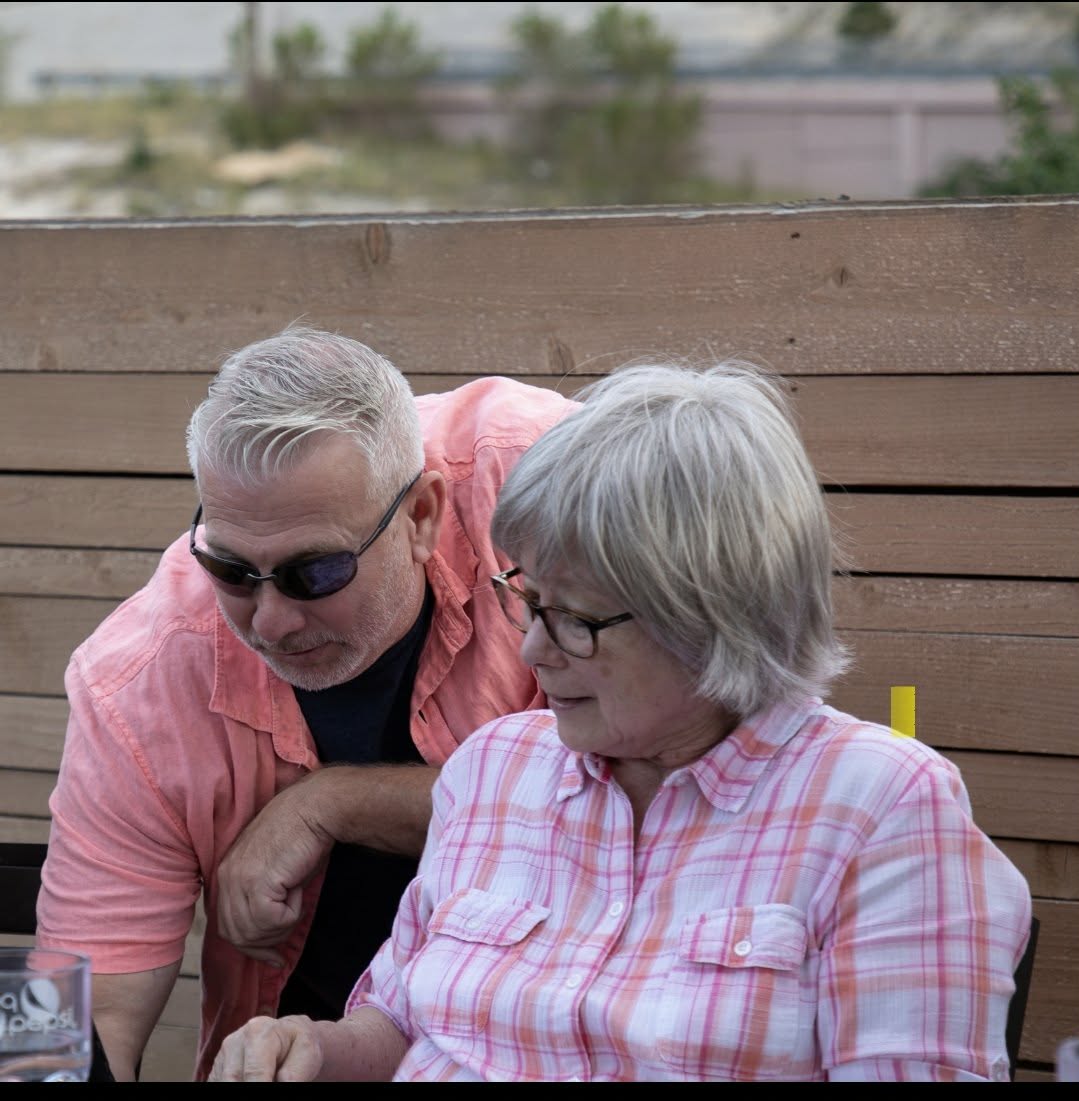
His faith is also central to that perspective. He credits his wife with consistently loving him as he is and helping him learn to extend that same acceptance toward himself. He also credits Randy Gariss with introducing him to a deeper understanding of faith that helped settle the anxiety and depression that had shaped so much of his life.
These relationships remind him that transformation rarely happens in isolation.
Sometimes another person holds a sentence for us until we are ready to believe it ourselves.
Looking Toward the Next Conversation
Scott is still early in the journey with WORDlabs, but he is already seeing a response to the idea.
People talk about safe spaces, strategic pauses, changed perspectives, and finally noticing something they had never considered before.
For Scott, that response matters more than conventional measures of growth.
His immediate goal is simple: earn the next conversation.
- The next question
- The next handshake
- The next WORDshop
- The next opportunity to help someone see their own story differently

He also hopes to make words something people cannot easily unsee. Not by policing language, but by reminding people that there is always another person on the other side of an email, text, phone call, meeting, dinner table, or conversation.
He may eventually turn the ideas into a book. He is also looking further ahead to a life in Japan, particularly Kamakura, a place he and his wife have grown to love through their travels.
But even those future plans seem connected to the same principle that now guides his work.
Do not rush toward the next destination simply because it is what everyone else expects.
Pause. Ask better questions. Look again.
Scott’s own language for that philosophy is clear:
“Before asking what you should do next, ask who you want to become. Then work in reverse.”— Scott Maninger
It is a lesson born from decades of achievement, painful setbacks, mental health struggles, family, faith, leadership, and the unexpected power of a sentence heard at exactly the right moment.
Perhaps that is why Scott no longer sees his past failures as permanent conclusions. They are experiences that can be revisited, understood, and redirected.
His story suggests that the words we carry are not always the truth.
Sometimes they are simply the first draft.
And sometimes, creating enough space to question that draft is where a different life begins.
For More Features
Be Featured in The Real Edit!
Every story has the power to shape how we see innovation, leadership, and purpose. If you’re a founder, creator, executive, or changemaker with a journey worth telling , we’d be honored to help you share it.
To inquire about being featured:
Email us at: info@realedit.site
Follow The Real Edit