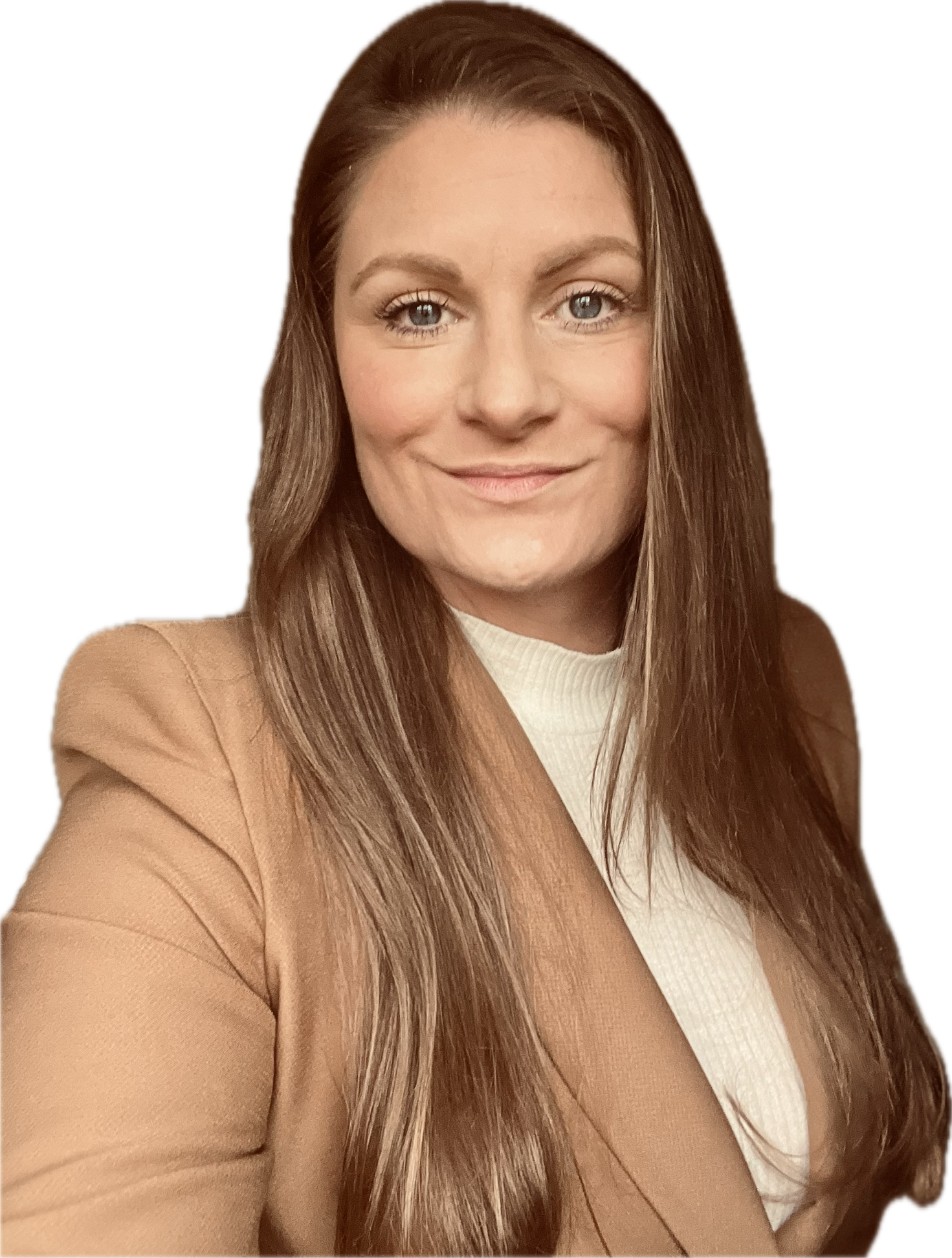
Meet Joanna
Joanna Marie Cortez is the founder of Funnel Grid by Jo, a funnel strategy and design business based in Cebu City, Philippines. With a professional background in graphic and web design, she now helps mindset-driven coaches create clearer customer journeys that connect design, strategy, and purposeful action.
When Beautiful Websites Were Not Enough
For Joanna, the path toward funnel strategy did not begin with a plan to become a funnel strategist. It developed gradually through years of creative work and a growing realization that something was missing from some of the websites she was building.
Her professional background was rooted in graphic and web design, where she helped businesses communicate who they were through visual identity and digital experiences. She enjoyed taking ideas that could sometimes feel complicated and turning them into websites and designs that were clear, engaging, and easier for people to understand.
There was something satisfying about that process. A blank page could become a structured website. A collection of ideas could become a visual experience. A business could communicate its story more clearly through the way that story was presented online.
But the more websites Joanna created, the more she began noticing a limitation.
Many of the websites she worked on had everything a business was expected to have. There was company information, descriptions of services, portfolios, testimonials, and a contact page. They looked professional and communicated credibility.
And yet, something could still be missing.
The visitor was often left to figure out what to do next.
For Joanna, this raised questions about the role of a website. A website could communicate a business beautifully without necessarily helping someone move toward a decision.
A simple “Contact Us” button could be the final call to action, but what happened if the visitor was not ready to contact the business yet? What information did they need first? What would help them understand the offer and feel ready to take the next step?
Those questions led Joanna to look beyond the individual website page.
She became increasingly interested in what happened before and after someone landed on a page—not just how the page looked, but what the person needed at that point in their journey and where they were meant to go next.
“A beautiful website doesn’t necessarily create movement.”
That idea became an important part of how Joanna began thinking about digital experiences. She started exploring funnels and conversion strategy, learning about customer awareness, offers, conversion paths, segmentation, email sequences, and automation.
For Joanna, this was a shift in perspective.
She was no longer looking at a website simply as a finished digital product. She was beginning to see it as one part of a larger customer journey.
The Question That Changed Her Approach
The shift was not the result of one dramatic career moment. It came through a question that developed naturally from her experience.
Joanna started wondering what happened before and after someone landed on a website.
A page might be visually strong, but where did it lead? An offer might be valuable, but did the visitor understand why it mattered? A call to action might be present, but was it actually the right next step for the person seeing it?
She became interested in the difference between communicating information and helping someone move forward.
“What if design could do more than communicate? What if it could guide someone toward the right next step?”
That question pulled her deeper into funnel strategy.
She wanted to understand not simply how to design an individual page, but how pages, offers, calls to action, emails, and automation could work together to move someone from awareness toward action.
Her perspective on design began to expand.
Instead of viewing a website as an individual experience, she began seeing it as one part of a larger journey. Every page could have a purpose. Every call to action could address a particular need. Every email could continue the conversation rather than simply deliver another message.
The question was no longer only whether a page looked good.
It became about what the person visiting that page needed at that particular stage.
Building Before She Felt Ready
Moving into funnel strategy also meant learning areas that were less familiar to Joanna.
Design had been her professional foundation. She understood the creative process, knew how to communicate visually, and had years of experience behind her.
Funnel strategy required a different way of thinking.
She had to learn about offers, customer awareness, decision-making, conversion paths, segmentation, automation, and the different factors that influence how people move through a buying journey.
There was a learning curve.
Rather than waiting until she had mastered everything, Joanna chose to learn by doing.
One of the biggest steps was deciding to build Funnel Grid for herself.
Instead of waiting for a client to give her the opportunity to create a complete funnel, she became her own case study. She mapped her customer journey, developed her offer structure, designed the pages, built the funnel, worked through the automation, and experienced the process from beginning to end.
It was not a perfectly linear process.
The funnel went through several iterations. Joanna questioned decisions, identified areas that needed improvement, rebuilt sections, and continued refining what she had created.
That experience gave her a practical understanding that simply studying funnels could not provide. She experienced what it was like to build while still learning.
She encountered uncertainty, reconsidered parts of the process, and continued working through the areas she had not fully figured out yet.
“I’m proud that I didn’t wait until I felt completely ready. I built something, questioned it, rebuilt it, and kept going.”
That experience reinforced an important lesson for Joanna: progress does not necessarily come from getting everything right on the first attempt. Sometimes it comes from being willing to look at what you have built, identify what needs to change, and improve it.
Building Funnel Grid also gave her a way to bring together the skills she already had with the new skills she was developing.
From Designer to Strategic Thinker
Joanna’s transition from designer to funnel strategist has not meant abandoning her original skill set.
If anything, she has come to see her design background as an important part of what she brings to funnel strategy.
Design taught her how to communicate visually. Funnel strategy taught her to think about what happens around that communication.
Together, the two perspectives allow her to look at a digital experience from different angles.
She can consider whether a page communicates clearly while also asking whether it serves the larger journey. She can think about visual hierarchy while considering the decision a visitor is being asked to make. She can look at an offer not only as something that needs to be presented attractively, but as something that needs to make sense within the customer’s broader experience.
This combination is central to the work she is building through Funnel Grid.
Her focus is particularly connected to mindset-driven coaches who may have expertise in helping people but feel overwhelmed by the technical and strategic complexity of online marketing.
For Joanna, the goal is not to create more complexity.
It is to create more clarity.
Making the Customer Journey Easier to Understand
Today, Joanna’s work is driven by a simple desire to help coaches move beyond having a beautiful online presence and toward creating an intentional customer journey.
That means looking at the entire experience rather than treating each component as a separate task.
A landing page has a role. An offer has a role. An email has a role. An automation has a role. A call to action has a role.
When those elements work together, the customer journey becomes easier to understand.
This matters because coaches can easily become overwhelmed by the number of things they believe they need to create. More pages, more emails, more tools, more content, and more technical systems can sometimes make a business feel more complicated rather than more effective.
Joanna wants to approach that differently.
Her starting point is understanding what the customer needs next.
That question can change how an entire funnel is built. Instead of asking what else needs to be added, the business owner can begin asking what is actually necessary at each stage of the journey.
For Joanna, simplicity is not about leaving important things out. It is about making sure every element has a reason for being there.
A Business Shaped by Simplicity
The values guiding Joanna’s work are integrity, continuous learning, and simplicity.
These values also shape the way she approaches her own development.
She does not see herself as having reached the end of her learning. Her move from design into funnel strategy has shown her that professional growth can involve taking knowledge from one area and applying it in another.
Her design experience did not become irrelevant when she began studying funnels. Instead, it gave her a foundation from which she could build something new.
That perspective also influences how she handles challenges.
When things do not go according to plan, Joanna tries to focus on what she can control and take things one step at a time. She sees setbacks as part of learning and development rather than as a reason to stop.
She also recognizes the value of stepping back, recharging, and returning to the work with a clearer perspective.
This practical approach has allowed her to continue developing Funnel Grid while giving both the business and her own skills room to evolve.
Building a Future That Leaves Room to Learn
Joanna’s vision for the future is closely connected to the kind of work she is already creating.
She wants to continue developing as a funnel designer and strategist while growing Funnel Grid into a sustainable business that helps mindset-driven coaches create simpler and more purposeful funnel systems.
She also wants to continue strengthening her skills across strategy, design, and conversion while building meaningful professional relationships.
But beneath those practical ambitions is a belief that has become an important part of her journey:
It is never too late to learn something new.
Joanna’s career demonstrates that professional identity does not have to remain fixed. A person can begin in one discipline, discover a problem within that field, become curious about the problem, and eventually find a new direction that combines what they already know with what they have learned along the way.
She is inspired by people who do the same—people who continue learning, adapt to new challenges, and build meaningful work without losing sight of their values.
That perspective gives her vision a personal quality. Funnel Grid is not simply another business project. It is part of an ongoing process of developing her skills, refining her approach, and becoming more intentional about the work she wants to do.
The Courage to Begin Again
Joanna’s story is ultimately less about moving from web design into funnel strategy and more about learning to look at familiar work differently.
She saw that websites could communicate without necessarily creating movement. Instead of accepting that as the end of the conversation, she became curious about what could happen beyond the page.
That curiosity led her into a new discipline and required her to become comfortable with learning something unfamiliar.
She had to learn, experiment, question her decisions, rebuild, and keep moving even when she did not have everything figured out.
Eventually, that process encouraged her to build Funnel Grid for herself.
Her journey also shows that reinvention does not always require leaving the past behind. Sometimes professional growth happens when previous experience becomes the foundation for a new way of thinking.
For Joanna, design remains part of the story. It simply exists alongside strategy now.
And that combination continues to shape the way she approaches funnels. She is not trying to create more for the sake of creating more. She is trying to understand what people need, remove unnecessary complexity, and make the path forward clearer.
In a digital world where businesses can easily become distracted by adding another page, another tool, or another piece of content, Joanna’s work returns to a quieter question:
What does the person on the other side need next?
For her, that question is where better funnels begin.
For More Features
Be Featured in The Real Edit!
Every story has the power to shape how we see innovation, leadership, and purpose. If you’re a founder, creator, executive, or changemaker with a journey worth telling , we’d be honored to help you share it.
To inquire about being featured:
Email us at: info@realedit.site
Follow The Real Edit