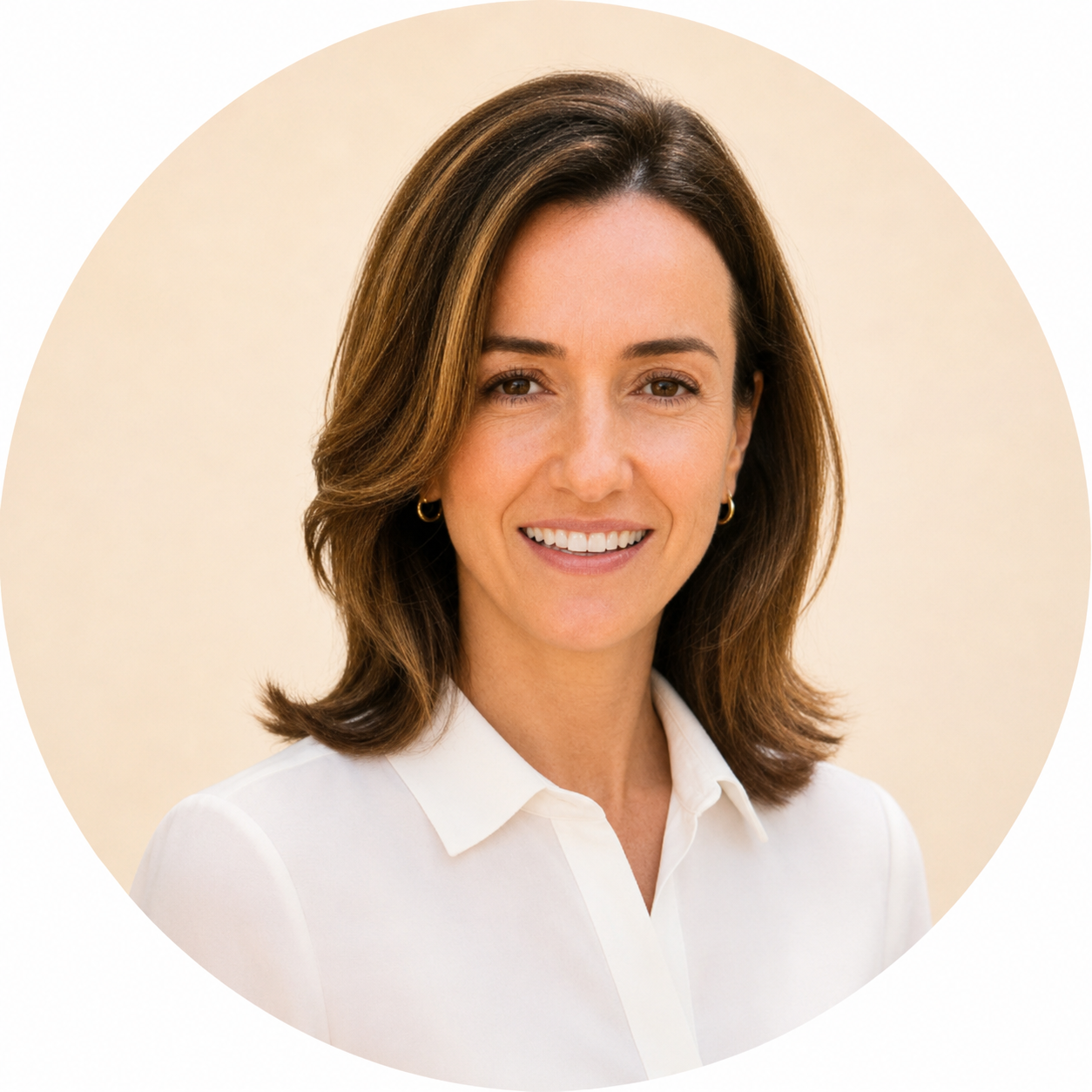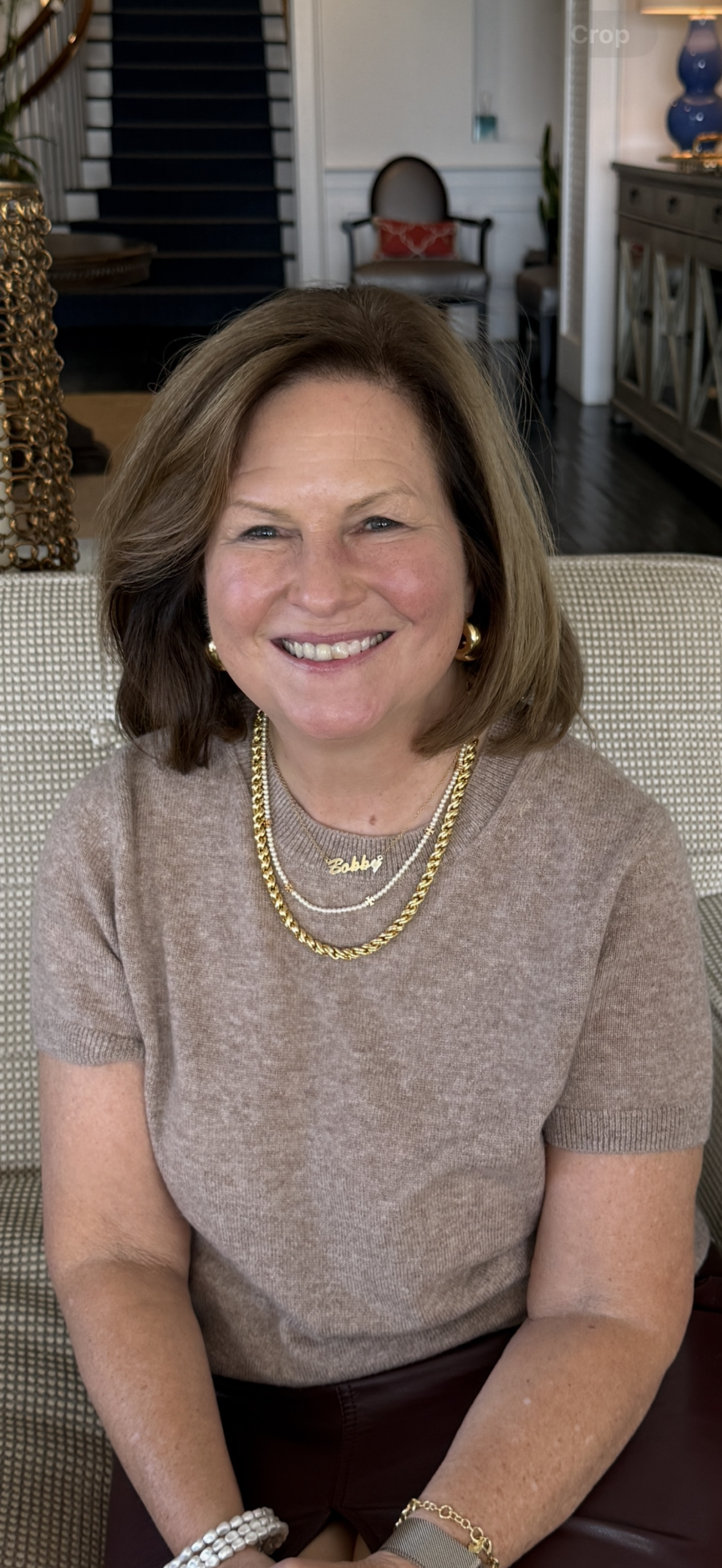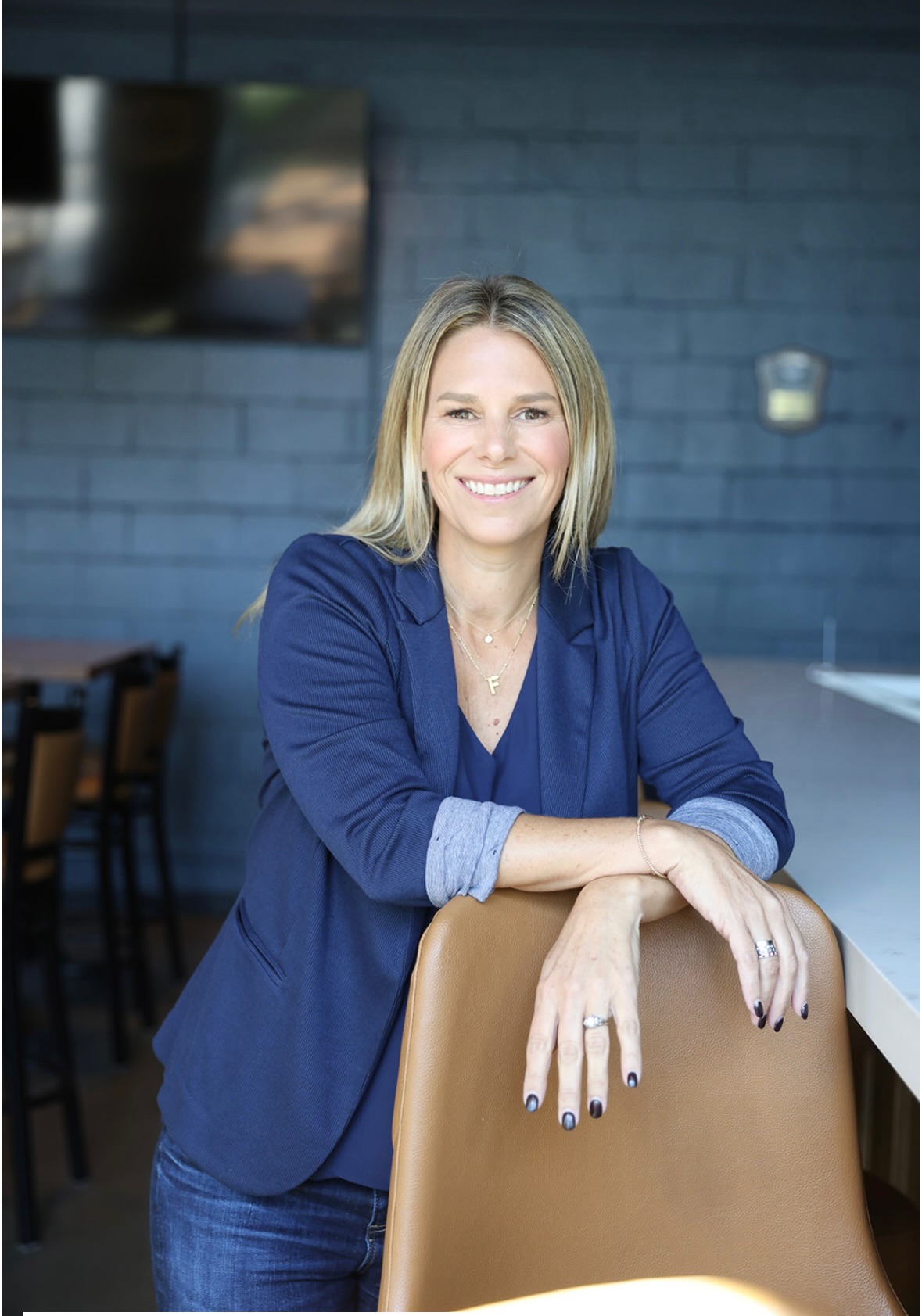
Meet Hale
Hale Doganci is the founder of COREVA Advisory, a leadership advisory practice based in Frankfurt, Germany. Her work focuses on the relationship between leadership, identity, strategic authority, visibility, and professional positioning. She works with ambitious leaders who have already achieved significant success but are entering a stage where their next chapter requires more than additional skills or responsibilities.
The Question Behind the Career
For Hale Doganci, a professional journey has never been only about building a career. Beneath the roles, responsibilities, and achievements was a quieter question that became increasingly difficult to ignore: who does a person need to become to lead at the next level?
Early in her career, Hale moved through international corporate environments where performance and adaptability were highly valued. She learned how to navigate demanding settings, take responsibility, meet expectations, and continue moving forward. Like many ambitious professionals, she initially understood growth through visible progress. A larger role meant growth. Greater responsibility meant progress. Another achievement offered evidence that she was moving in the right direction.
That approach served her well for many years. Yet eventually, achievement began to raise questions rather than answer them.
The more she accomplished, the more she became interested in something deeper: the person behind the accomplishments and the identity that had made them possible.
This distinction would eventually become central to her work.
Hale began to recognize that some of the hardest challenges experienced by accomplished leaders are not caused by a lack of intelligence, ambition, or experience. Often, people reach a point where the identity that helped them succeed is no longer sufficient for where they want to go.
The dependable professional who built a reputation through execution may eventually need to become a more visible decision maker. The person who earned recognition by consistently delivering may need to become comfortable claiming authority before someone else confirms it. A leader who once relied heavily on external measures of success may eventually need to decide what success means personally.
For Hale, understanding this was not an abstract professional observation. It was becoming personal.
When the Familiar Version of Life Fell Away
One of the most significant periods in Hale’s life came when several of the external structures that had given her a sense of security began to disappear.
At different stages, she left a relationship with her partner, friendships, her home, her country, and eventually the professional identity she had known. Each departure carried its own weight. Together, they created a period in which familiar sources of belonging and certainty could no longer provide the same answers.
It is difficult to know who we are when the environment around us constantly reinforces an identity. A profession can tell us that we are successful. A relationship can provide a sense of belonging. A familiar community can give us roots. A home can create stability. Even a title can become a shorthand for how we understand ourselves.
When those things change, the question of identity becomes much more direct.
Hale found herself confronting the uncomfortable space between the person she had been and the person she had yet to become. There was no immediate replacement waiting to make everything feel certain again.
Rather than rushing to recreate the life she had lost, she began learning to remain with uncertainty. She had to develop trust in her own judgment without relying as heavily on external confirmation. She had to distinguish what genuinely belonged to her from what had been shaped by expectations, achievement, and the desire to be recognized.
This process changed her understanding of resilience.
For Hale, resilience is not always about enduring difficulty by working harder or pushing forward. Sometimes it means allowing an old identity to end without immediately constructing a new one. It means having enough patience to let clarity develop instead of forcing an answer simply because uncertainty is uncomfortable.
That lesson became especially important because it challenged an assumption that often shapes ambitious careers: that every difficult period must be solved quickly.
Hale learned that there are moments when the most productive response is not another plan. It is reflection, self trust, and the willingness to listen carefully to what is emerging.
Her own transition eventually led her toward a different kind of professional work, one that focused less on organizational performance alone and more on the human being carrying the responsibility.
From Achievement to Authority
The founding of COREVA Advisory marked an important shift in Hale’s professional life. It was not simply the decision to start a company. It represented a decision to define her work according to a deeper understanding of leadership.
Today, Hale works with ambitious leaders who have already demonstrated their competence but may be facing a different kind of challenge. They may be ready for greater responsibility but not yet fully recognized at that level. They may be highly capable but find that their visibility does not reflect the value they bring. They may have reached a point where the professional identity that helped them progress has begun to feel restrictive.
Her approach brings identity into conversations about authority and positioning.
Rather than treating leadership as a collection of techniques, Hale looks at how people understand themselves, how they communicate their value, and how they occupy professional space. For her, strategic authority is not about creating an artificial persona or learning to appear more powerful. It is about becoming more conscious of what a person stands for and developing the ability to communicate that with clarity.
Many accomplished professionals are accustomed to proving themselves through work. They become reliable because they deliver. They become trusted because they solve problems. They become valuable because others know they can depend on them.
But there can come a point when reliability alone is not enough.
Leadership at a higher level often requires visibility, judgment, influence, and the willingness to be associated with a point of view. It requires someone to take ownership of their contribution rather than waiting for others to define it.
Hale’s work addresses that transition from being known primarily for what you do to being recognized for the authority and perspective you bring.
Her philosophy is particularly relevant to professionals who have spent years earning credibility quietly. The next step may not require them to become louder. It may require them to become clearer.
Building Leadership From the Inside Out
The heart of Hale’s work is the belief that external positioning becomes stronger when it is connected to internal clarity.
A leader can refine a professional profile, increase visibility, or improve communication, but those efforts become much more meaningful when they reflect a genuine understanding of identity and direction.
This is why Hale brings together several elements that are often treated separately: identity, visibility, positioning, and authority.
Identity asks who the person is becoming.
Positioning asks what they want to be known for.
Visibility asks whether the right people can actually see and understand their contribution.
Authority asks whether they are willing and able to occupy the space associated with the level they are pursuing.
Together, these questions create a more complete picture of leadership development.
One client, a senior professional with a decade of stability in her role, experienced this shift firsthand. She had applied for a leadership position that seemed like the natural next step, but the process stalled for months. She felt overlooked, and the uncertainty took a toll.
Through the work, she learned to communicate her value with clarity instead of over-explaining or waiting to be noticed. When the role ultimately didn’t materialize due to a shift in business strategy, unrelated to her, the outcome no longer defined her experience of the process. She had already become the next-level version of herself — more intentional, more visible, more confident in what she brought to the table.
As she put it: “It was the next-level version of me who handled it differently.”
Hale’s perspective challenges the idea that recognition must always come first. In many professional environments, people wait for a promotion, a title, or an invitation before allowing themselves to behave as though they belong at a higher level.
Her work encourages leaders to consider another possibility: internal ownership can precede external recognition.
That does not mean ignoring organizational realities or pretending that titles do not matter. Instead, it means understanding that authority is not entirely dependent on a position. It is also expressed through judgment, communication, responsibility, and the willingness to take ownership.
When people become more secure in their authority, they can make decisions with greater clarity. They can communicate without constantly seeking approval. They can take responsibility for the influence they have and become more deliberate about how they use it.
Redefining What Success Means
Perhaps the most personal dimension of Hale’s philosophy is the way her definition of success has changed.
Earlier in her career, success was closely associated with external measures. Higher titles, larger environments, greater responsibility, recognition, and visible progress all carried meaning.
Over time, however, she discovered that achievement alone could not provide lasting certainty about personal worth.
The question became less about how far she could go and more about whether the life she was creating actually felt aligned with who she was.
Today, Hale sees success through the lens of alignment.
That means doing meaningful work while continuing to evolve. It means making decisions that feel right even when they do not conform to someone else’s expectations. It means having enough freedom to pursue work she believes in and enough inner stability to experience the life created through that work.
Ambition has not disappeared. If anything, Hale’s ambitions have become more intentional. She still wants to build, contribute, influence, and grow. The difference is that achievement is no longer being asked to answer the question of whether she is enough.
That realization also influences the way she thinks about the people she serves.
Many high performing professionals have become exceptionally skilled at achieving. They know how to work hard, adapt, deliver, and overcome obstacles. What they may not have learned is how to pause and ask whether the identity driving that achievement still reflects the person they want to become.
For Hale, that question is not a sign of weakness. It can be the beginning of a more conscious form of leadership.
The Principles That Keep Her Grounded
Several values sit beneath Hale’s approach to leadership: integrity, courage, self trust, ownership, and continuous growth.
Integrity means being willing to acknowledge what is true, including the parts of a career or life that are no longer aligned. It requires honesty before change can begin.
Courage means being willing to leave familiar ground when it no longer reflects who someone is becoming. Hale’s own experience taught her that certainty is not always available before an important decision has to be made.
Self trust has become equally important. Professional environments can make people highly responsive to external expectations. Over time, that responsiveness can become so strong that people lose touch with their own judgment.
For Hale, learning to trust oneself is itself an act of leadership.
Ownership follows naturally from that idea. Leadership becomes more meaningful when people stop waiting for permission to take responsibility for their voice, choices, contribution, and influence.
Then there is growth, understood not simply as advancement but as a willingness to continue questioning and evolving.
These values form a simple philosophy: tell yourself the truth, trust your judgment, take responsibility for the space you occupy, and remain willing to change.
Faith also plays an important role in how Hale navigates uncertainty. She has learned that not every chapter can be understood while it is happening. Some periods only make sense in retrospect.
That perspective allows her to resist the pressure to control every outcome. She does not see faith as a guarantee that everything will unfold according to plan. Instead, it provides a sense of trust that uncertainty does not have to mean being lost. There can be meaning in the process even when the destination is not yet visible.
A Bigger Vision for COREVA
Hale’s ambitions for COREVA Advisory extend beyond individual advisory relationships.
She wants to develop the practice into a distinctive leadership platform focused on identity, strategic authority, visibility, and positioning. Over time, she hopes to build a broader methodology and ecosystem through programs, thought leadership, partnerships, and community.
The larger goal is to reach more people who are navigating the transition between one professional identity and the next.
But there is another part of the vision that is equally important to her. She wants the business to evolve alongside her rather than requiring her to become someone she no longer recognizes.
That principle reflects the central lesson of her own journey.
A successful career should not require a person to permanently separate professional achievement from personal identity. Growth can be ambitious without being disconnected from the life surrounding it.
Hale wants COREVA to contribute to a broader change in how ambitious professionals understand their careers. Instead of measuring every stage through achievement and external validation, she hopes more people will become intentional about authority, visibility, identity, and the meaning behind their success.
The future she imagines is not simply about helping people prepare for another promotion or professional milestone. It is about helping them understand how to inhabit the next chapter once they arrive there.
Becoming More Fully Yourself
There is a quiet consistency running through Hale Doganci’s story.
The work she does today grew from questions she once had to ask herself. What remains when achievement is no longer enough? Who are we when familiar roles disappear? How do we make decisions when certainty is unavailable? What does it mean to build a life that reflects our own definition of success?
Those questions transformed her career, but they also transformed her understanding of leadership.
Her message to professionals is ultimately less about becoming impressive and more about becoming honest. People can spend years constructing versions of themselves that are successful on paper while gradually becoming disconnected from their own values and instincts.
At some point, that distance becomes difficult to ignore.
Hale’s story suggests that the answer is not necessarily to abandon ambition. It is to redefine it.
The next level may not demand another credential, another title, or another achievement. It may require a deeper relationship with one’s own identity and the courage to let that identity be visible.
For Hale, leadership begins when external validation stops being the only source of authority. It grows when people learn to trust themselves, take ownership of their contribution, and make room for a future that may look different from the life that brought them there.
Her own journey through uncertainty gave her an understanding that cannot be separated from her work. She knows what it means to stand between identities, to release familiar definitions of success, and to rebuild from a place of greater self trust.
That may be the most meaningful thread in her story.
Sometimes the next chapter does not begin when we achieve something new. It begins when we become willing to question who we have been and discover who we are ready to become.
For More Features
Be Featured in The Real Edit!
Every story has the power to shape how we see innovation, leadership, and purpose. If you’re a founder, creator, executive, or changemaker with a journey worth telling , we’d be honored to help you share it.
To inquire about being featured:
Email us at: info@realedit.site
Follow The Real Edit