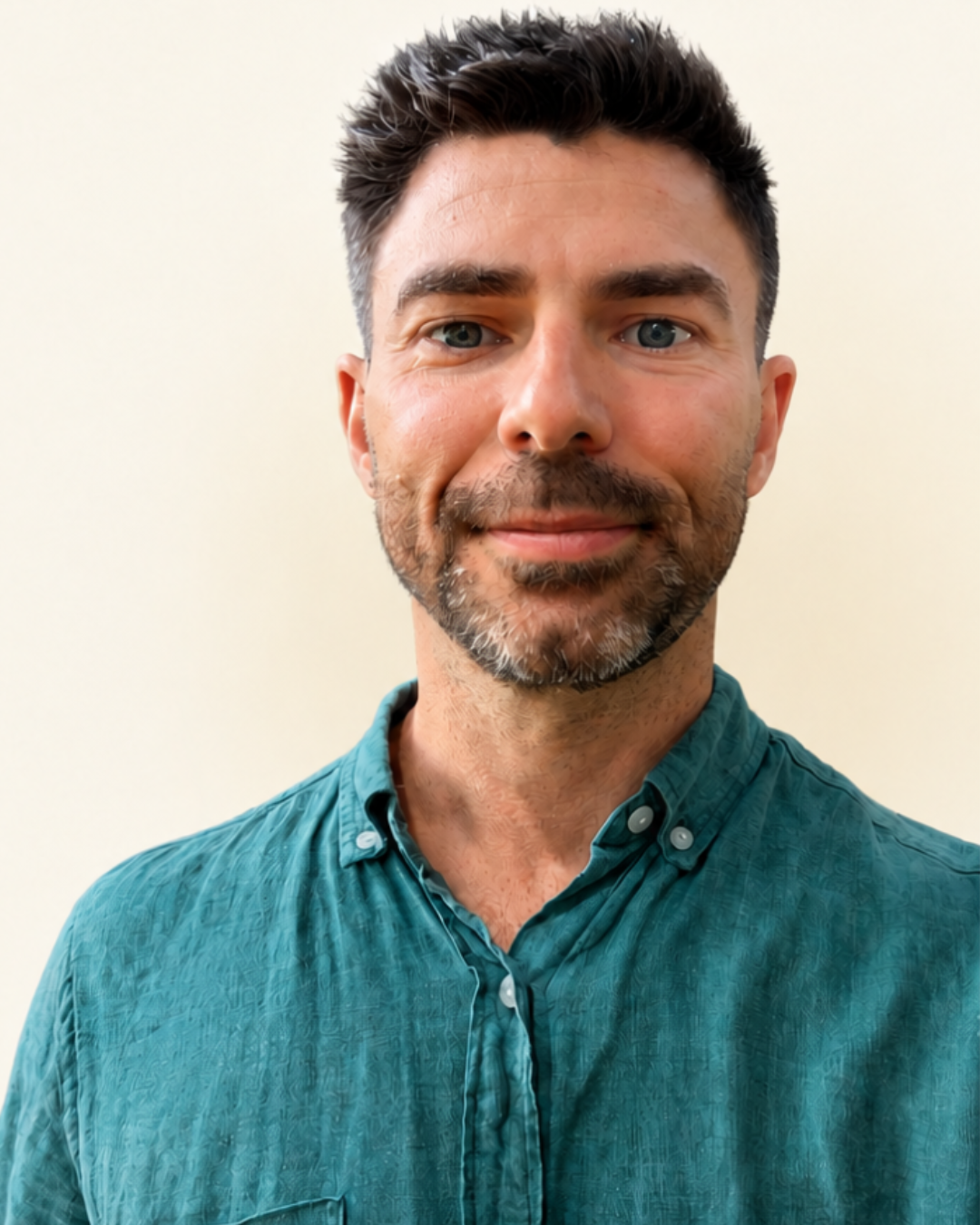

Meet Navid
Navid Nazemian is a Dubai based executive coach, bestselling author, keynote speaker, and Non Executive Director who focuses on one of the most difficult moments in senior leadership: stepping into a new role and making it work. After 26 years in global corporate HR with organisations including Adidas, GE, BAT, Roche, and Vodafone, he founded his own executive coaching practice in 2022, building his work around the challenges and possibilities of leadership transitions.
The Question That Stayed With Him
There is a particular kind of leadership challenge that does not always announce itself as a problem. A person gets the promotion. The board approves the appointment. The new title appears on the email signature. On paper, everything seems to be moving in the right direction.
Yet the first year can be surprisingly difficult.
For Navid Nazemian, understanding why became more than an interesting question. It became the centre of his professional life. After spending more than two decades inside some of the world’s largest organisations, he had watched talented executives enter important roles with every qualification needed to succeed, only to struggle once they were actually in the seat.
The pattern stayed with him because it seemed both significant and preventable. Leadership transitions affect not only the individual taking on a new role, but also teams, families, organisational performance, confidence, and reputation. When a transition goes badly, the consequences rarely remain contained within an office.
His work today is built around changing that experience. Rather than treating a new leadership appointment as the finish line, he sees it as the beginning of a period that deserves careful preparation, honest reflection, and sustained support.
That perspective did not come from theory alone. It was formed through years of watching leaders navigate change from close range.
Twenty Six Years Inside the Corporate World
Before becoming an independent coach, Nazemian spent 26 years working in corporate HR. His career took him through five major global organisations, including Adidas, GE, BAT, Roche, and Vodafone, as well as across Europe and the Middle East.
The experience gave him an unusual view of leadership. HR can place a person close to moments that are both highly strategic and deeply personal. Senior appointments, organisational changes, succession decisions, restructures, and leadership transitions can alter the direction of a business while simultaneously changing the lives of the people involved.
He eventually reached the position of Global Head of HR at Roche, where he was closely involved with significant leadership transitions. By then, he had seen enough to recognise that a recurring problem was hiding in plain sight.
Executives were often selected because they were highly capable. They knew their industries. They had delivered results. They understood their functions and had earned the confidence of their organisations. But being capable of doing a job was not necessarily the same as being prepared to enter it.
The distinction became increasingly important to him.
Around 40 percent of executive transitions are considered unsuccessful within the first 18 months, according to Heidrick & Struggles. Behind that figure, however, are individual experiences that statistics cannot fully capture. A leader can lose confidence. Relationships can become strained. A reputation built over years can become vulnerable. Teams can lose direction. Families can feel the pressure of a demanding professional transition.
Nazemian began to see executive transition not as a small part of leadership development, but as a discipline in its own right.
Leaving the Structure Behind
In 2022, he made the decision to leave corporate life and establish his own executive coaching practice in Dubai.
The move meant leaving behind the certainty and infrastructure of a senior corporate position. After years inside established organisations, he was suddenly responsible for creating the structure himself. There was no existing brand to stand behind, no established client base, and no organisational system waiting to support the next step.
It was a different kind of transition, and perhaps an appropriate one for someone who would spend the next chapter of his career studying them.
He describes the leap as one of the biggest challenges he has faced professionally. The answer was not to pursue every opportunity that appeared, but to become more selective.
He chose one problem and stayed with it.
“Pick a problem, not a title.”
That principle has become central to the way he thinks about careers. Rather than measuring professional progress only through positions, status, or the next promotion, he believes there is value in finding a question or problem that remains meaningful over time.
For Nazemian, that problem was already waiting for him. He had spent years watching executive transitions succeed and fail. He understood the organisational consequences, but he was equally interested in the human experience behind them.
Leaving corporate life allowed him to make that question the foundation of his work.
From Experience to a Body of Work
Building a coaching practice was only part of the challenge. Nazemian also wanted to turn what he had learned through years of experience into something that could exist beyond individual coaching conversations.
That required a different kind of discipline.
One to one coaching allows a coach to respond to a particular leader, in a particular situation, at a particular moment. But the wider problem of executive transition reaches much further than a single relationship. If the goal was to improve how organisations approached transitions, the knowledge needed to become more accessible.
This led Nazemian toward writing, research, frameworks, and educational programmes.
His book, Mastering Executive Transitions: The Definitive Guide, brought more than two decades of experience together in one place. Dr. Marshall Goldsmith wrote the foreword, an endorsement that Nazemian describes as deeply meaningful, particularly as a first time author working in a specialised field.
The book later received a Gold Medal at the 2025 Global Book Awards and a Book Excellence Award in Leadership.
His work has also developed into proprietary frameworks, including TransitionIQ and the Double Diamond Framework. Through these tools, he has sought to make the thinking behind successful transitions more structured and usable for executives, coaches, and HR professionals.
The progression reflects something important about his approach. Experience matters, but experience that remains only in the head of one practitioner has limits. Turning experience into a framework creates the possibility that the lessons can travel further.
The Human Cost Behind the Statistics
It would be easy to describe executive transitions purely in terms of business performance. A new CEO needs to understand the organisation. A new general manager needs to build relationships. A newly appointed leader needs to establish credibility and make decisions.
Nazemian sees another layer beneath all of that.
The leader going through a transition is a person, not simply an organisational resource.
A difficult transition can affect confidence, health, family life, and a person’s sense of identity. Senior leaders are often expected to appear certain even while they are learning an unfamiliar organisation, managing new expectations, and making decisions with incomplete information.
The pressure can be considerable because senior positions leave little room for visible uncertainty.
This is where Nazemian’s coaching work becomes particularly personal. He works with CEOs, general managers, and senior executives during periods when the normal assumptions of professional life have shifted. The work is private, and he considers that privacy part of its value.
He believes the individual outcome matters just as much as the organisational one. When a leader successfully settles into a new role while maintaining their wellbeing and relationships, the effects can extend outward.
A leader influences a team. A team contributes to a company. A healthier professional environment can affect the people employees return home to each evening.
The impact, in his view, is therefore larger than the executive sitting across from him.
What Success Looks Like Now
Despite the recognition that has accompanied his second career, Nazemian does not describe success primarily through awards or rankings.
He has been named the World’s #1 Executive Coach by CEO Today in 2022, 2023, and 2024, making him the only coach to have been recognised more than once in the ranking. He was also recognised as HR’s Most Influential Practitioner by HR Magazine. His book has received international recognition, and his speaking and coaching work have taken his ideas into a wider leadership conversation.
Those achievements matter, but he sees them differently from the way they might appear from the outside.
For him, they are indicators rather than the destination.
“Rankings, awards, and bestseller lists are lovely, but they’re lagging indicators.”
What matters more is whether the work itself still feels meaningful. He values having the freedom to choose the problem he works on, the people he works with, and the way he approaches the work.
That freedom represents one of the greatest differences between his corporate chapter and his life now.
After spending much of his career within large organisations, he has reached a point where professional success is closely connected to personal alignment. He wants to do work he cares about, with people he respects, without losing the parts of life that exist outside the work.
Staying Whole While Doing Meaningful Work
The independence of his current career has not eliminated the need for balance. If anything, it has made that responsibility more visible.
Nazemian considers fitness non negotiable and protects time with his family rather than allowing it to become whatever remains after work. He has also learned the value of stepping away, whether through walking, taking a weekend away from professional demands, or reading something unrelated to leadership.
There is a practical wisdom in that approach.
Executive coaching requires presence. A coach who is constantly depleted cannot offer the level of attention that difficult conversations demand. Maintaining personal wellbeing therefore becomes part of the quality of the work itself.
His clients also provide perspective. Sitting with leaders who are navigating serious challenges has a way of putting everyday frustrations into proportion. At the same time, he does not position himself as someone who has all the answers.
Some of his own thinking has been shaped by watching clients handle difficult situations with greater grace or clarity than he might have expected.
That openness is consistent with the kind of leadership philosophy he admires. He points to Marshall Goldsmith as an important influence, particularly because of his combination of rigour, humility, and generosity. Nazemian is drawn to people who create meaningful impact without allowing achievement to consume their sense of self.
That standard appears to influence how he thinks about his own future.
Taking the Work Further
The next chapter of Nazemian’s work is about expanding access without losing depth.
TransitionIQ is one part of that effort. The diagnostic aims to bring lessons from one to one coaching into a form that can reach more leaders. His immersive e learning programme, Mastering Leadership Transitions, is another way of making the broader body of knowledge available to executives and HR teams.
There is also continued work around research and frameworks such as the Double Diamond model.
The ambition is not simply to build a larger business. It is to build a stronger field of practice around executive transitions.
Nazemian hopes that organisations will eventually treat transition support as a normal part of senior appointments. In his ideal future, preparing someone for a major leadership move will be regarded as essential rather than optional.
But growth has not changed his relationship with the original work.
Individual coaching remains important to him because it keeps the broader ideas grounded in real human experience. Frameworks can organise knowledge. Books can spread it. Digital programmes can make it accessible. But sitting with a leader during a genuinely difficult moment remains where much of the deepest learning happens.
Transitions Are the Career
Looking back across two very different professional chapters, Nazemian’s story is less about leaving one career behind than about recognising the thread that connected everything he had already experienced.
His years in HR gave him proximity to leadership change. His corporate career exposed him to the consequences of poorly managed transitions. Leaving corporate life forced him to experience a transition of his own. Coaching gave him a way to work closely with leaders facing similar moments. Writing and framework development gave him a way to make those lessons more widely useful.
The pieces eventually formed a coherent body of work.
His advice to other professionals reflects that perspective. Careers are often imagined as a sequence of positions, promotions, and achievements. Nazemian sees something different. The most meaningful careers may be built around questions that continue to matter long after a particular job title has changed.
He encourages leaders to take transitions seriously because they are not interruptions to a career. They are part of the career itself.
Every promotion brings a transition. Every new organisation brings one. Every major change in responsibility does the same. Even the move toward board work later in a career requires a person to reconsider how they contribute and who they are in the role.
There is no final appointment that removes the need to adapt.
A Career Built Around One Important Question
Nazemian’s story ultimately comes back to a simple observation: being chosen for a role and succeeding in that role are two different achievements.
His work exists in the space between them.
After 26 years inside global corporations, he could have built his independent career around the prestige of his previous positions. Instead, he chose a problem. He stayed close to it, studied it, wrote about it, built frameworks around it, and made it the foundation of his practice.
There is something quietly significant in that decision.
His definition of success has become less about how impressive a career looks from the outside and more about whether it remains whole from the inside. The awards and recognition have opened doors, but the deeper measure is whether the work continues to feel worthwhile when the room is quiet and there is no audience.
For Nazemian, the answer appears to rest in the leaders he continues to sit beside, the difficult transitions he helps them navigate, and the belief that a moment of professional uncertainty does not have to become a defining failure.
A transition can be difficult without being destructive. A new role can be challenging without costing a person their wellbeing. And a career can evolve without requiring someone to lose themselves along the way.
That is the work Navid Nazemian has chosen to keep returning to, one transition at a time.
This is for preview purpose only. It is unlisted and unindexed on the Internet
For More Features
Be Featured in The Real Edit!
Every story has the power to shape how we see innovation, leadership, and purpose. If you’re a founder, creator, executive, or changemaker with a journey worth telling , we’d be honored to help you share it.
To inquire about being featured:
Email us at: info@realedit.site
Follow The Real Edit