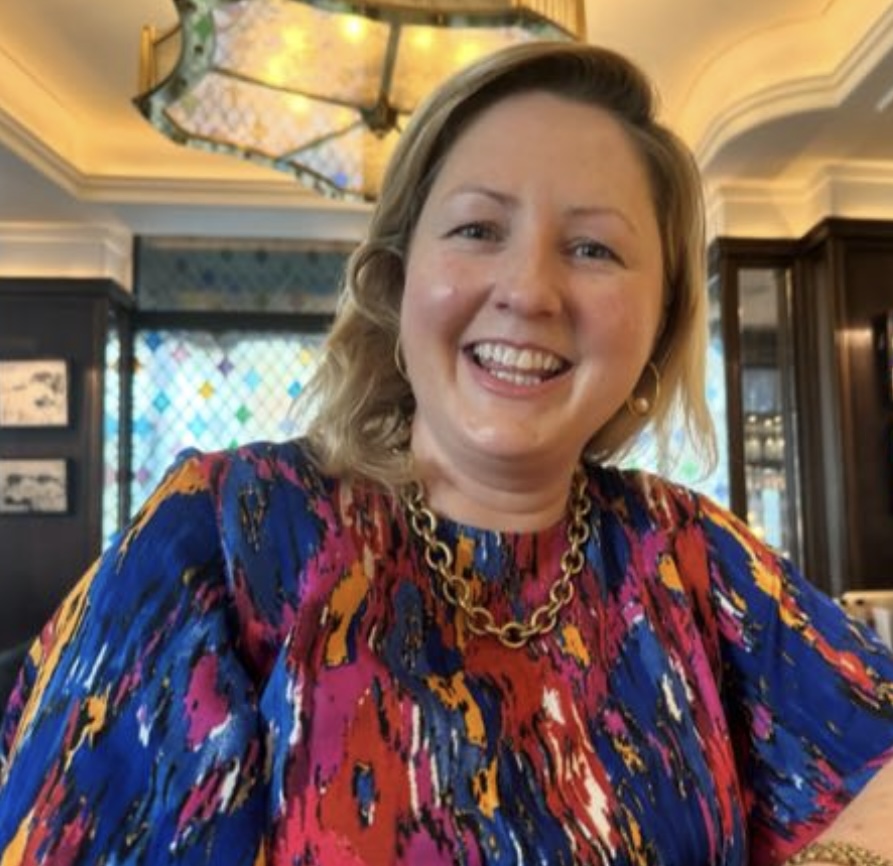
Meet Shannon
Shannon du Plessis is the Co Founder and Vice President of KruShan Foundation, a small US based nonprofit dedicated to protecting critically endangered African penguins and supporting the people and organizations working to save them. Based in Wimberley, Texas, she brings together a background in accounting and technical writing with her long standing work as a wildlife photographer, Texas Master Naturalist, and Climate Reality Leader.
When One Penguin Changed Everything
Some life changing moments arrive with a grand announcement. Others waddle into your life unexpectedly.
For Shannon du Plessis, the moment came in South Africa in 2010, when she encountered her first African penguin. She and her husband, Kruger, named the bird Waddlesworth. She remembers being immediately captivated by the creature’s movements and personality. The experience was joyful, almost playful, but Kruger noticed something beneath that joy. He saw that there were fewer penguins than he remembered seeing along the coastline.
That difference in perspective became important. Shannon saw a remarkable animal and felt an instant connection. Kruger saw a coastline that had lost something. Together, those observations became the beginning of a much larger realization.
“A penguin torpedoed my career plans.”
At the time, Shannon’s professional life had taken different forms. She had worked in accounting and had also owned a technical writing business. She was already someone who cared deeply about the natural world, but caring and acting were not yet the same thing in her life.
The African penguin changed that.
The species was listed as endangered in 2010, the same year Shannon first encountered one. Its declining numbers reflected a much larger environmental story. The penguins were facing pressures connected to disappearing fish stocks, changing marine ecosystems, and climate change. What struck Shannon and Kruger was not simply that a beloved species was declining. It was the imbalance behind the decline.
The creatures contributing least to the forces changing their environment were among those paying the greatest price.
The seed of KruShan Foundation was planted there.
From Supporting Nonprofits to Becoming One
Shannon had already spent part of her career around nonprofit organizations through accounting. From the outside, it might have seemed like meaningful work. She was helping organizations manage an important part of their operations, and she heard other nonprofit accountants talk about the fulfillment they found in supporting causes they believed in.
For Shannon, however, something was missing.
She did not simply want to help nonprofits from the accounting side. She wanted to be closer to the reason the work existed in the first place. She wanted a direct relationship with a cause that mattered to her.
“Realizing that I wanted to run a nonprofit rather than do the accounting for nonprofit clients was a turning point.”
That realization required a change in direction. It meant moving away from a more conventional professional role and toward something that was deeply personal.
The decision was not based on a desire to build an organization for its own sake. In fact, Shannon’s own advice today reflects a thoughtful caution about creating nonprofits. She believes people should ask whether forming a new organization is truly necessary or whether their energy might be better spent supporting one that already exists.
Her own answer happened to be yes.
She and Kruger created KruShan Foundation around a species that had captured their attention and, eventually, their sense of responsibility. What began with one encounter became an ongoing commitment to African penguins and to the people working on the ground to protect them.
That distinction matters. Shannon’s work is not only about penguins. It is also about understanding the wider ecosystem around them, the communities connected to conservation, and the network of people who know what needs to happen next.
Finding the Underdogs Worth Backing
KruShan Foundation occupies an unusual place in the conservation world. It is a very small nonprofit, part of a sector where many organizations operate with modest budgets. Yet its size has become part of how Shannon thinks about the foundation’s role.
The organization does not try to compete with larger conservation groups for attention. Instead, it asks a more immediate question: what is the most urgent need right now, and who can address it most effectively?
That approach depends on relationships.
Shannon and her team stay in close contact with conservation partners in South Africa. Those relationships help them understand what is happening beyond headlines and public campaigns. Sometimes the right partner is a large, established conservation organization. Other times, the best answer is a small nonprofit that has remarkable knowledge and ability but little public visibility.
KruShan Foundation can help connect resources with those organizations.
There is a humility to that model. The foundation does not need to be the largest organization in the room. It needs to be useful.
Shannon describes the organizations and people she works with as dedicated, caring, and straightforward. Those qualities appear to matter to her as much as institutional reputation.
The foundation also sees storytelling as an important part of conservation. It offers a free five day email course to help people learn about African penguins, giving those who may never have encountered the species a reason to understand their lives and their importance.
The goal is not simply to make people care about a charming bird. It is to help them understand what the bird represents.
African penguins are indicators of ocean health. Their decline can tell a larger story about the condition of marine ecosystems. Their struggle is therefore connected to issues that extend far beyond the coastline where they live.
For Shannon, that connection changes the conversation. Protecting penguins is not an isolated act of animal protection. It is also a way of paying attention to the health of the natural systems on which people depend.
Empathy as a Way of Working
Shannon’s approach to conservation begins with empathy, but she does not see empathy as something passive or sentimental.
For her, empathy creates movement.
It can turn an abstract problem into something personal enough to act upon. A declining population statistic can be difficult to emotionally grasp. An injured penguin struggling to survive is much harder to ignore.
That emotional connection is one reason penguins have such an unusual ability to bring people into conservation. They are expressive, social, and often funny to watch. They can create joy while also opening the door to a difficult conversation about environmental decline.
Shannon believes that combination matters.
There is room for grief in conservation, but there also needs to be room for hope, humor, connection, and community. Without those things, the emotional weight of the work can become difficult to carry.
She has learned that conservation is not a simple story of progress. Population data can return worse than expected. Efforts can take years. Some problems cannot be solved quickly. The people who stay committed are often those who learn how to live with uncertainty without allowing it to stop them from contributing.
That perspective shapes her own leadership.
She does not measure the value of the work only by whether every problem is solved. Instead, she focuses on the part she can influence and the relationships she can strengthen.
A Small Foundation With a Long Reach
Being small has also allowed KruShan Foundation to operate differently.
Shannon values the organization’s ability to respond without unnecessary layers of administration. When a partner needs support, the foundation can move quickly. The organization can also develop campaigns and communications that feel personal rather than overly formal.
Its approach to partnerships is similarly collaborative. Shannon believes smaller organizations can accomplish more when they share knowledge, tools, and opportunities rather than compete for limited attention.
That philosophy is reflected in the foundation’s work across South Africa.
One of the projects Shannon is especially proud of involved funding an X ray room for one of the foundation’s partners. Before the room existed, injured penguins and other seabirds could face a long journey to reach a veterinarian with appropriate equipment. The trip could be roughly 45 miles each way, adding stress and delaying diagnosis.
The new X ray room changed that equation.
A bird arriving for treatment can now receive an immediate assessment in the area where it is being cared for. For an injured animal already frightened and vulnerable, eliminating a long journey can make a meaningful difference.
One of the penguins to benefit from the facility was Limp Bisket.
He was first rescued in 2021 after being found on Bird Island with serious abdominal and leg injuries caused by a seal bite. He recovered at SANCCOB and was released into the wild, but he was later found again in November 2025 in poor condition and weighing only 2.36 kilograms.
An X ray revealed permanent damage to the joint between his lower leg and foot. The injury was likely connected to the earlier seal bite. His resulting wobble and slight limp inspired the name Limp Bisket.
After careful feeding and treatment, he reached a healthy weight and was released again in December 2025.
For Shannon, the most meaningful part of the story is not simply that the foundation funded a room. It is that future birds will not have to endure the same long trip simply to receive a basic diagnostic procedure.
That is what impact looks like when it is viewed from the ground.
Conservation Belongs to Communities Too
Shannon’s understanding of impact extends beyond direct animal care.
African penguins are part of a wider social and economic landscape. Tourism connected to the species and their coastal environment supports local businesses, guides, accommodation providers, restaurants, and other community members. Hundreds of thousands of visitors contribute billions of South African rand in tourism revenue.
Conservation, therefore, is not separate from human communities.
KruShan Foundation has supported educational work that reflects this belief. In partnership with Cape Nature, the foundation helped provide 40 disadvantaged students in Gansbaai with a three day autumn retreat through the DEEP Blue Ambassadors program.
For some of those students, the experience was extraordinary for a simple reason. Although many lived only a few miles from the sea, some had never actually seen the ocean.
The program creates a connection between young people and the environment around them. Students who complete the program can later mentor younger participants, allowing knowledge and enthusiasm to move from one generation to the next.
For Shannon, that matters because conservation cannot depend only on today’s advocates.
The future of any species also depends on whether the next generation develops a relationship with the natural world strong enough to make protection feel personal.
Choosing Hope Without Ignoring Grief
Shannon does not describe her outlook as simple optimism.
She knows the numbers can be painful. She knows that conservation brings disappointment and grief, especially when a population declines despite years of work.
But she has found another way to think about persistence.
The people who remain involved over the long arc of a conservation effort are not necessarily those who never feel grief. They are the people who learn to carry it while continuing to participate.
That distinction seems to sit at the center of Shannon’s philosophy.
Her own values eventually revealed themselves in an unexpected way. She and Kruger spent time defining the principles that mattered most to them, only to discover that the first letters spelled the word HOPE: Humility, Openness, Partnership, and Empathy.
They had not designed the values around the word. They discovered it afterward.
Perhaps that is fitting.
Hope, in Shannon’s work, is not a promise that everything will turn out well. It is the decision to keep contributing even when certainty is impossible.
Looking Toward a Wilder Future
The foundation’s next chapter is already taking shape.
Shannon is working with two organizations involved in rewilding a former African penguin colony in De Hoop Nature Reserve in South Africa. Forty African penguins returned this year and are breeding, offering a rare and encouraging sign.
KruShan Foundation is still determining the best way to contribute, with its part of the work expected to begin in 2027.
For Shannon, the larger ambition is straightforward. She wants the foundation to remain capable of helping when its conservation partners need it most.
One of her greatest goals is to reach a point where the foundation never has to tell a partner that it cannot help because the funds are not available. So far, despite its small size, it has been able to avoid saying no.
That achievement says something about what can happen when an organization knows its purpose clearly.
The foundation does not need to solve every conservation problem. It needs to recognize where its support can make a meaningful difference and be ready to act.
Staying in the Fight
Shannon’s story began with a penguin, but it has become a story about attention.
Paying attention to what is disappearing. Paying attention to people doing difficult work without much recognition. Paying attention to communities that deserve a place in conservation conversations. Paying attention to the emotional cost of caring deeply about something that may not be fixed in one lifetime.
Her career changed because one small bird made a distant problem feel close.
Years later, that sense of closeness remains at the heart of her work. She continues to photograph wildlife, learn from nature, build relationships, and support the people working to protect African penguins.
Her philosophy can be summed up in the simple idea that every day leaves an impact. The question is what kind of impact a person chooses to make.
For Shannon, the answer has been found in showing up for a species that cannot speak for itself, supporting people who are already doing the work, and helping others discover why the fate of a penguin on a distant coastline has something to do with all of us.
The work is small in scale, but deeply personal.
And somewhere along South Africa’s coastline, a penguin waddling toward the water carries a reminder of why she began.
For More Features
Be Featured in The Real Edit!
Every story has the power to shape how we see innovation, leadership, and purpose. If you’re a founder, creator, executive, or changemaker with a journey worth telling , we’d be honored to help you share it.
To inquire about being featured:
Email us at: info@realedit.site
Follow The Real Edit