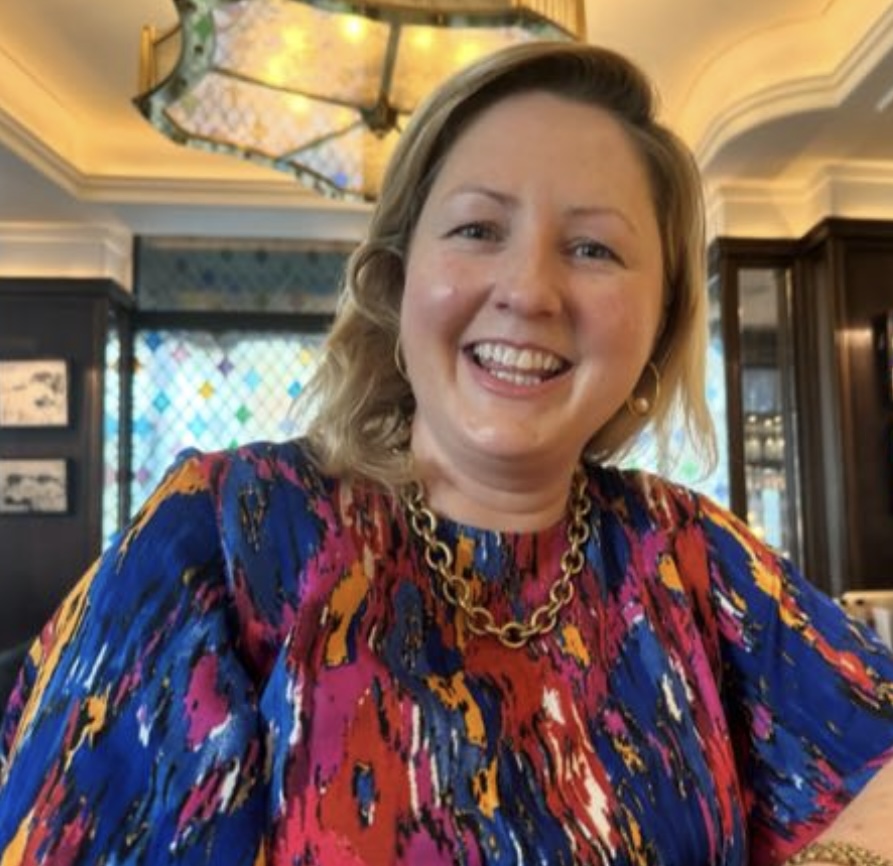
Meet Marline
Dr. Marline C. Duroseau is a leadership strategist, executive, adjunct professor, researcher, author, TEDx speaker, and entrepreneur based in Hollywood, Florida. As CEO of MCDBE and Managing Director of HR and Leadership Development, she works at the intersection of organizational resilience, leadership development, human transformation, and sustainable performance.
The Numbers Were Only Part of the Story
For Dr. Marline C. Duroseau, leadership was not always about understanding people. Her professional foundation was built in accounting and finance, where numbers, performance, and measurable outcomes shaped the way she approached organizations. Over more than two decades, that foundation carried her into executive leadership and eventually into the role of CFO within the healthcare industry.
But the longer she worked at the executive level, the more she noticed something that financial statements could never fully explain. Organizations might have strategies, systems, budgets, and targets, yet their ability to move forward often depended on something much more human.
People determined what happened next.
That realization gradually expanded the direction of her career. Finance remained part of her professional foundation, but it was no longer the whole story. Leadership, talent development, education, research, and organizational transformation became increasingly important parts of her work.
Her career eventually grew into a collection of roles that might appear separate on paper. She became a leadership strategist, adjunct professor, researcher, author, TEDx speaker, executive advisor, and entrepreneur. Yet, when she looks at the path as a whole, the connection is clear. Each chapter has given her another way to understand how people respond to uncertainty and how leaders can help organizations move through difficult periods without losing sight of their humanity.
Her work today is shaped by a simple but deeply considered question: what allows people and organizations to remain capable when circumstances become difficult?
It is a question she has explored professionally, academically, and personally.
When a Professional Path Became a Personal Inquiry
Becoming a CFO represented an important milestone, but it was not the moment that defined the deeper direction of her work. Some of her most significant lessons came from circumstances that could not be managed through a spreadsheet, executive plan, or organizational strategy.
Her fifteen year infertility journey changed the way she understood resilience.
The experience unfolded alongside an already demanding executive career. There were periods of loss and uncertainty, difficult decisions, high risk motherhood, and private struggles that had to coexist with the expectations of professional leadership. She continued to lead while carrying experiences that were largely invisible to the people around her.
Over time, she began to understand that resilience could not simply mean surviving whatever happened next.
For her, resilience became something more active and more nuanced. It involved adapting, reassessing identity, understanding what could and could not be controlled, and finding the willingness to move forward in a different way.
That personal journey eventually became the foundation for her doctoral research in organizational leadership and women. Rather than separating her professional identity from her personal experiences, she began to see how the two could inform one another.
The result was a significant evolution in how she understood her own story.
She no longer viewed the different chapters of her life as disconnected experiences. Her work as an executive informed her research. Her research deepened her leadership practice. Her personal experiences gave greater meaning to the questions she explored as a scholar, speaker, and advocate.
Completing her Doctorate in Organizational Leadership became part of that evolution. So did developing her own leadership frameworks, including Leader Morphology in the Labyrinth, becoming a TEDx speaker, publishing her work, and expanding her role from executive practitioner to researcher, educator, strategist, and advocate.
The progression was not simply about collecting new titles. It was about discovering what each stage had taught her and finding ways to make those lessons useful to others.
Strength That Makes Room for Change
One of the strongest ideas running through Dr. Duroseau’s work is that resilience should not be confused with endless endurance.
Her experiences taught her that continuing forward at all costs is not always the healthiest or wisest form of strength. Sometimes resilience requires a pause. Sometimes it means reconsidering a decision, changing direction, or acknowledging that the circumstances have altered what is possible.
She describes balance in much the same way. Rather than trying to distribute attention equally across every part of life, she focuses on what matters most in a particular season. That approach allows her to remain intentional without expecting every responsibility to receive the same amount of energy at the same time.
The lesson is especially relevant to leadership because executives and organizations often operate under the assumption that strength means constant forward movement. Yet change rarely follows a straight line. Markets shift. Teams evolve. Personal circumstances change. Unexpected challenges emerge.
The ability to respond thoughtfully can matter just as much as the ability to execute a plan.
Dr. Duroseau’s philosophy has been shaped by this understanding. She believes leaders can pursue strong performance while still creating environments where people are treated with dignity, given room to develop, and encouraged to take responsibility for their work.
Her leadership principles are rooted in integrity, excellence, service, resilience, and accountability. These values are not presented as abstract ideals. They are standards she uses to think about the relationship between performance and responsibility.
Leadership, in her view, should produce results, but it should also answer for how those results are achieved.
Making Resilience Part of the Organization
Today, Dr. Duroseau brings her experience across executive leadership, research, education, and entrepreneurship into work focused on helping leaders and organizations navigate complexity and change.
Her work includes executive advisory, leadership development, teaching, speaking, research, and the development of practical frameworks designed to strengthen organizational capability. Among these is The Resilience Operating System™, a framework and system she developed to help organizations build resilience into the way they operate.
A central concern is the tendency to treat resilience as an individual responsibility. Employees are often encouraged to become more adaptable, more flexible, and better equipped to cope with pressure. Yet an organization can continue creating unnecessary strain if its systems, decisions, communication, and leadership practices remain poorly aligned.
Dr. Duroseau believes resilience needs to exist at the organizational level as well.
That means examining how decisions are made, how leaders communicate during uncertainty, how teams are supported, and whether the structures surrounding employees actually allow them to adapt and perform.
The Resilience Operating System™ reflects this organizational approach by providing a practical way to think about resilience as something that can be embedded into systems, leadership practices, and organizational operations rather than left entirely to individual employees.
When resilience becomes part of the way an organization operates, people do not have to carry the entire burden themselves.
This distinction is important to her because sustainable performance cannot depend entirely on individual endurance. A healthy organization should develop systems that help people respond to disruption rather than leaving each employee to absorb its effects alone.
Her goal is therefore practical. She wants leaders to have clearer ways to make decisions, navigate transformation, strengthen capability, and maintain performance while preserving the human side of leadership.
She says,
“I am driven by the belief that people and organizations can perform at a high level without sacrificing their humanity in the process.”
That belief connects the different parts of her career. The financial executive understands performance and accountability. The researcher examines leadership through evidence and inquiry. The adjunct professor helps future leaders develop their thinking. The speaker brings complex ideas into public conversations. The entrepreneur turns those ideas into practical solutions.
Each role contributes something different, but they ultimately serve the same purpose.
A Legacy Measured by What Becomes Possible for Others
Dr. Duroseau does not define success only through titles, credentials, revenue, or recognition.
Achievement matters, but it is not the final measure.
For her, success is connected to alignment. Meaningful work should exist alongside relationships, service, personal presence, and a sense of purpose. Accomplishments become more meaningful when they create possibilities for someone else.
That perspective is closely connected to her upbringing.
Her parents, who were Haitian immigrants, were among her earliest influences. Their journey taught her about perseverance, sacrifice, education, and the importance of creating opportunities for the generations that follow.
Mentors also played an important role. They encouraged her to believe more fully in her abilities, use her voice, and speak with confidence even when doing so felt uncomfortable.
Those lessons continue to shape how she approaches leadership.
She now encourages others to advocate for themselves and recognize that their experiences can carry value even when those experiences do not fit neatly into a professional narrative.
Her own story is an example of that principle. Some of the experiences that influenced her leadership most deeply were not accomplishments that could be placed on a résumé. They were periods of uncertainty, private struggle, adaptation, and personal growth.
Those experiences eventually became part of her scholarship and advocacy.
Through her work, she has also sought to bring greater visibility to subjects that are often left outside conventional leadership conversations, particularly the intersections of women’s leadership, infertility, loss, and resilience.
These are deeply personal subjects, but she approaches them through the same lens that guides her broader work: understanding how lived experience can become knowledge, and how knowledge can become something useful to others.
The Work Ahead
The next chapter of Dr. Duroseau’s work is focused on expanding the reach of her ideas through speaking, executive advisory, research, and scalable leadership and resilience solutions.
She is continuing to develop frameworks and programs that can help leaders and organizations navigate transformation while strengthening sustainable performance.
There is also a growing advocacy dimension to her future work. She plans to expand her nonprofit efforts around infertility, maternal wellness, and pregnancy and infant loss. These areas connect directly to experiences that have already influenced her research and leadership philosophy.
For her, advocacy is not separate from professional leadership. It is another expression of service.
The future she is building therefore combines several forms of work that have gradually become connected throughout her career. There is the executive perspective, the academic perspective, the educator’s perspective, and the perspective of someone who has lived through circumstances that fundamentally changed her understanding of resilience.
Together, they allow her to approach leadership from more than one direction.
Her ambition is not simply to produce more work. It is to make that work more accessible, practical, and consequential for the people and organizations who need it.
The Experiences That Never Made the Résumé
Looking back, Dr. Duroseau’s career is difficult to understand through a conventional timeline alone.
Accounting and finance led to executive leadership. Executive leadership opened questions about people and organizational behavior. Personal experience deepened those questions. Doctoral research gave them an academic foundation. Speaking, writing, teaching, and entrepreneurship created new ways to share and apply what she had learned.
The story is not one of leaving one identity behind for another. It is a story of allowing each identity to inform the next.
That may be one of the most important lessons in her approach to leadership. A career does not have to follow a perfectly predictable path to have meaning. A difficult season does not necessarily represent lost time. A personal experience does not have to remain separate from professional purpose.
Sometimes the experiences that initially feel like interruptions become the source of the deepest understanding.
She says,
“Some of the greatest sources of leadership, wisdom, and purpose are developed in seasons that feel like interruptions rather than accomplishments.”
For Dr. Duroseau, that understanding has changed what leadership means. It is not simply about reaching a position of authority or maintaining performance through difficulty. It is about continuing to learn, remaining willing to adapt, and using what one has experienced to make the path more possible for others.
Her story also offers a quieter definition of achievement. A meaningful career is not necessarily the one with the most impressive list of titles. It can be the one where professional knowledge, personal experience, service, and purpose eventually meet.
That is where Dr. Duroseau’s work now lives.
She continues to study leadership, teach it, practice it, speak about it, and challenge the ways organizations understand resilience. Beneath all those roles is a consistent belief in human capacity.
People can change. Leaders can evolve. Organizations can learn to operate differently.
And sometimes the experiences that once seemed to delay a person’s progress become the very experiences that give them the depth to lead with greater understanding.
For More Features
Be Featured in The Real Edit!
Every story has the power to shape how we see innovation, leadership, and purpose. If you’re a founder, creator, executive, or changemaker with a journey worth telling , we’d be honored to help you share it.
To inquire about being featured:
Email us at: info@realedit.site
Follow The Real Edit