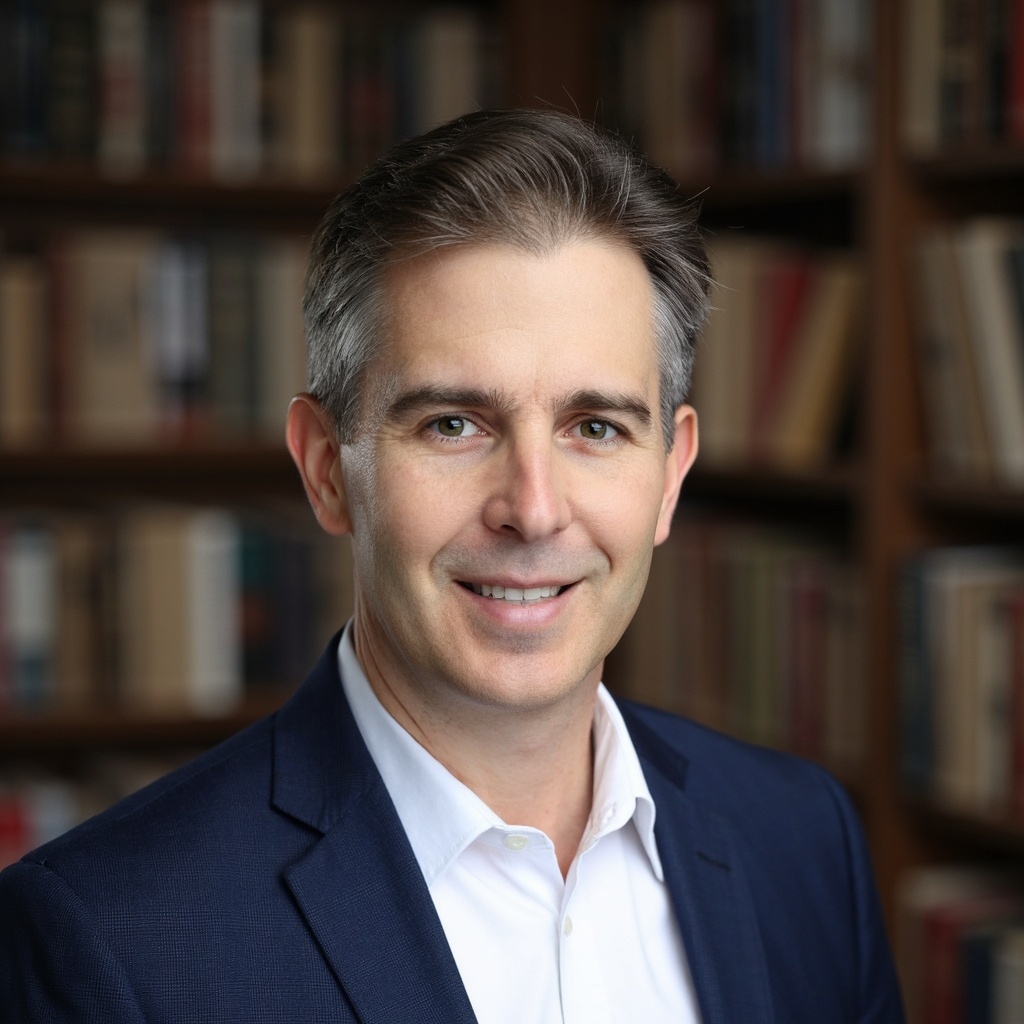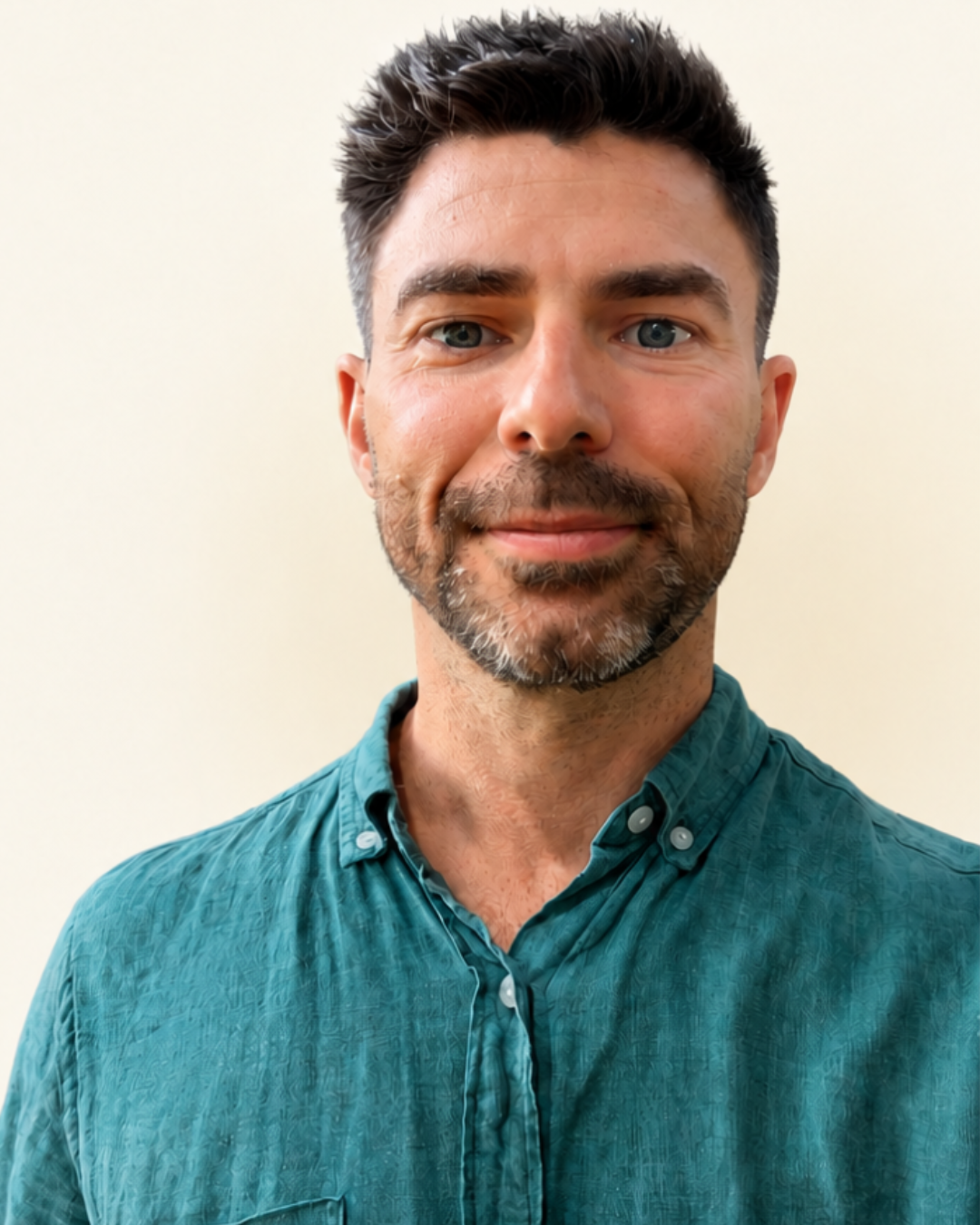
Meet Henry
Henry J. Svec is the founder of Ask Hank, a family of specialized AI conversation spaces shaped by more than three decades of experience as a psychologist. Now retired, he continues to write, invest, keep bees and explore questions that interest him, using curiosity and practical reasoning to create new spaces for conversations that may otherwise go unheard.
A Different Kind of Retirement
At 70, Henry J. Svec does not seem particularly interested in the conventional idea of retirement. For him, stepping away from a formal career has not meant stepping away from work, questions or the desire to understand how things fit together. His days now move between writing, investing, beekeeping, thinking and building projects that emerge from observations he cannot quite ignore.
That instinct to notice what is missing has become central to his work with Ask Hank. Rather than setting out with a fixed plan to build a collection of AI platforms, he followed a series of questions. He saw people who appeared to fall outside existing forms of support, or who needed a place to have a particular kind of conversation. He began wondering whether technology could create those spaces.
The result is a growing family of specialized conversation environments designed around different groups and moments in life. There are spaces for veterans, police officers, nurses, people returning to work, employers, claims adjudicators and parents of teenagers. More recently, he created Grandparent.AskHank.ai after recognizing something closer to home. Parents have access to countless resources, while grandparents often have to search for advice within spaces that were not created specifically for them.
For Henry, that simple observation was enough to begin exploring what might be possible.
The Perspective Built Over Three Decades
Long before artificial intelligence became part of his work, Henry spent more than 30 years as a psychologist. His career brought him into contact with people and organizations navigating difficult circumstances, complex decisions and deeply personal questions. Those years gave him more than professional knowledge. They gave him an appreciation for listening, uncertainty and the many ways people make sense of their lives.
Psychology also taught him that meaningful conversations are rarely simple exchanges of information. People bring history, emotion, assumptions and uncertainty into the questions they ask. Understanding the person behind the question can matter as much as the answer itself.
That experience became unexpectedly relevant when Henry began experimenting seriously with AI.
He was less interested in the novelty of a large language model than in a different question: could a system reflect a particular way of reasoning developed through decades of experience? For him, the language model was only part of the equation. The more interesting challenge was whether his approach to thinking could shape the conversation in a consistent way.
This became the foundation of Ask Hank.
He describes the relationship between the technology and his framework in straightforward terms: “The large language model provides the language. The Ask Hank reasoning framework is what shapes the conversation.”
It is an idea rooted less in technology for its own sake than in the possibility of creating useful spaces for reflection. The technology matters, but the reasoning behind it is what gives each space its character.
Following the Questions That Do Not Go Away
Henry’s path into this work was not driven by a conventional career plan. In fact, he is reluctant to describe it as a new career at all.
His tendency is to observe something that does not quite make sense and stay with the question. Why does a particular group not have a resource designed for them? Why does a gap exist between established forms of support? Could something be built to make that gap a little easier to navigate?
That habit of questioning has followed him throughout his life.
It also explains why his work today extends beyond Ask Hank. He continues to invest, write and study honeybee behaviour. His beekeeping has developed into a serious data-gathering project focused on the relationship between honeybee behaviour and environmental factors.
Using remote cameras and artificial intelligence, his work includes counting bees, drones and bees carrying pollen at hive entrances within short video clips. The longer-term goal is to build a high-quality database that could help answer important questions about honeybee survival and environmental conditions.
Once again, his interest begins with observation.
He sees something happening in the world, recognizes that there may be a question worth investigating and begins looking for a way to understand it more clearly. Whether the subject is human behaviour, artificial intelligence, business or bees, the underlying instinct remains much the same.
Curiosity gives him a reason to keep moving.
Learning to Be Wrong
Henry does not describe the difficult moments in his life as obstacles that simply needed to be overcome. His view is more nuanced. Challenges have often forced him to pause, reconsider an assumption and sometimes change direction.
That willingness to revise his thinking has become one of the principles he values most.
He has made mistakes across different parts of his life, including business, investing, psychology and beekeeping. Rather than treating mistakes as evidence of failure, he sees them as part of the process of learning. What matters is whether a person is prepared to examine what happened honestly and make a different decision when the evidence demands it.
His thinking has also been influenced by the idea of inversion associated with investor Charlie Munger. Instead of only searching for evidence that confirms an existing belief, Henry tries to consider how he might be wrong.
That practice sounds simple, but it requires humility. It means listening to opinions that conflict with one’s own without immediately dismissing them. It means allowing another person’s perspective to exist without feeling compelled to accept it.
For Henry, listening is not passive. It is a form of intellectual discipline.
He believes people would benefit from spending more time genuinely considering views that challenge their own. The goal is not necessarily to change one’s mind. Sometimes it is simply to understand why someone else sees the world differently.
That approach has become increasingly important to him with age. He does not see himself as having arrived at a final set of answers. At 70, he remains willing to reconsider, experiment and learn.
Building Places Where People Can Pause
The Ask Hank platforms reflect Henry’s belief that not every meaningful conversation needs to take place inside a formal institution.
Some people have obvious places to turn when they need information, perspective or support. Others may find themselves in moments that do not fit neatly into an existing category. They may be between jobs, navigating family relationships, adjusting to retirement or trying to understand a responsibility that has changed with age.
The specialized Ask Hank spaces are designed around those moments.
Henry is careful not to overstate what they accomplish. He does not claim to know exactly what happens after someone enters one of the platforms. The system measures visits and return visits at the entrance, but it does not follow users beyond that point.
That restraint is deliberate.
Ask Hank is intended as a voluntary, non-clinical space. People can enter when they want to have a conversation and leave when they choose. There is no requirement to disclose anything, follow a program or commit to a particular outcome.
For Henry, the idea is close to something ordinary and accessible: a place where someone can sit for a while and put down some of the weight they are carrying.
His hope is that this kind of access can eventually become available to Canadians more broadly, offering a place that is there whenever someone wants it.
The ambition is not about replacing existing forms of professional or personal support. It is about creating another kind of space, one that is simple, voluntary and available around the clock.
A Life Shaped by Responsibility and Perspective
Henry’s understanding of purpose has also been shaped by the people around him.
He speaks with deep appreciation of his parents, who began their lives in Canada working as a butler and maid before becoming farm workers. Their experience taught him something about adversity and persistence. His father-in-law later became another important example, particularly through his practical approach to problems and his common sense.
One principle that has become particularly important to Henry is considering the effect of a decision not only on the present generation but on seven generations into the future. It is a long view that encourages patience and responsibility rather than immediate gratification.
He also places value on gratitude and on recognizing the role of randomness in any account of success. Hard work matters greatly to him, but he does not believe that achievement can be explained by effort alone.
There are circumstances people cannot control, opportunities they did not create and advantages they may not even recognize until much later.
Remembering that keeps success in perspective.
What Comes Next
Henry’s plans for the future are remarkably consistent with the way he has approached the present. He wants to continue developing Ask Hank and making its different reasoning-based platforms available to more people.
The technology itself will continue to change. New language models will emerge, but Henry sees that as an advantage rather than a threat. Because the reasoning framework can be layered onto different language models, the underlying approach can continue even as the technology evolves.
The same principle applies to his work with honeybees. He wants to continue gathering reliable data that could contribute to a better understanding of bee survival and environmental conditions.
Neither project is entirely separate from the other. Both involve paying attention to patterns that might otherwise be overlooked.
One focuses on people and the conversations they may need. The other focuses on insects, ecosystems and environmental signals. What connects them is the willingness to look closely, collect information and ask better questions.
Staying Useful, Staying Curious
For Henry, retirement has not been about becoming less engaged with the world. It has given him greater freedom to decide what deserves his attention.
He can spend time on questions simply because they interest him. He can move between psychology, technology, investing and beekeeping without needing to justify each transition through a conventional professional path.
There is also a strong sense of responsibility behind that freedom.
Henry believes that having the ability and resources to address a problem is a gift. He has always found himself drawn toward difficult situations, particularly moments when something needs to be fixed. That instinct helped define his professional life and continues to influence his projects today.
But his perspective is not simply about solving every problem that appears. It is about remaining engaged enough to recognize which problems deserve attention.
That may be the most enduring connection between his years as a psychologist and his work with Ask Hank. Both begin with listening. Both require curiosity. Both depend on resisting the temptation to assume that the first answer is necessarily the right one.
At this stage of his life, Henry seems less interested in proving what he knows than in continuing to discover what he does not.
A Place to Keep Learning
There is a quiet consistency in Henry J. Svec’s story. His work has changed, his tools have changed and the questions in front of him have changed, but the underlying instinct remains familiar.
He notices. He listens. He questions. He experiments. When something does not work, he tries to understand why.
He does not present mistakes as something to hide, nor does he treat experience as permission to stop learning. Instead, he sees both as part of staying useful and engaged.
His advice to others comes from that same perspective: work hard, listen seriously, accept that mistakes are necessary and do not allow fear of failure to prevent action.
“Regret is the enemy, not failing.”
It is a fitting reflection for someone who has reached 70 and continues to build, study and question. Henry’s story is not really about retirement or artificial intelligence. It is about what can happen when a person remains curious long after the conventional milestones of a career have passed.
For him, there is still something worth noticing, something worth understanding and perhaps something worth building. That seems to be enough reason to keep going.
For More Features
Be Featured in The Real Edit!
Every story has the power to shape how we see innovation, leadership, and purpose. If you’re a founder, creator, executive, or changemaker with a journey worth telling , we’d be honored to help you share it.
To inquire about being featured:
Email us at: info@realedit.site
Follow The Real Edit